
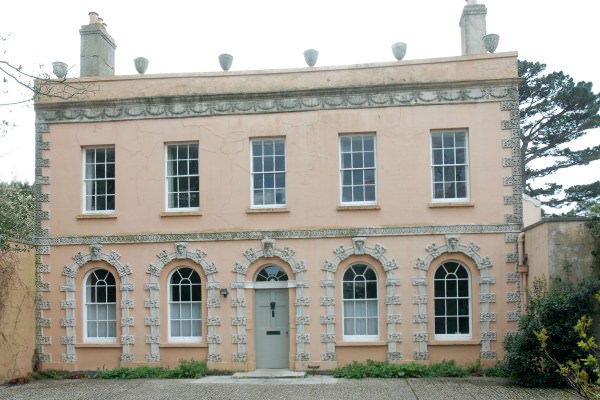
Belmont as I first saw it
The first time I stood in front of this façade I was 26 years old. It was 1974. I was terrified. I had written John Fowles to ask if I might visit him and interview him and he had accepted—if I would agree not to stay “too long.” I had Roger with me (to drive and support me) and we had walked around Lyme Regis in the rain for an hour. We were both soaked—a couple of wet, bedraggled kids knocking on the very formidable front door of Belmont, home of the famous, best-selling author and his wife. Scared almost speechless.
That door opened onto people and events that changed my life, of course. I have described this before—how welcoming, kind, and sort of parental both John and Elizabeth were that day, and in many so days that were to happen in the future. I was one of the earliest of Fowles’ scholars and one that he liked and was glad to work with—I don’t know how that happened, but it’s true. Liz must have decided we were ok. She kept us there all the afternoon that day and was forever trying to get me to meet her daughter. Anyway, 30 years later, I was the one John chose to write his biography. I always thought it was partly because Liz liked me and, after her death, he wanted someone who would do right by her.
So, Friday, October 10th—with Liz’s daughter Anna, my dear friend for 20 years—I stood again in front of Belmont’s dramatic façade, now scaffolded, shrouded, and wrapped, a huge shiny box sitting on the top of Lyme’s hill, visible from all over. The day was blessed with the most glorious sunshine. We were about to be conducted on a tour of the construction of the historic preservation of Belmont by the Landmark Trust. We said later how fabulous it was that we were invited to see everything and understand what was going on, because if we had simply seen that monster and the surrounding construction site, we both would have felt so sad and depressed. As it turned out, however, we saw a Belmont beginning to come alive again—and we came away elated.
The Fowleses moved to Belmont in 1968, just after he had sent the manuscript of The French Lieutenant’s Woman to his publisher. He lived there until his death in 2005. Liz died there in 1990. John remarried ten years later to his friend Sarah Smith. It was Sarah who negotiated the sale of Belmont to the Landmark Trust, according to John’s wishes, so that the house would be saved and not turned into just another Lyme Regis hotel or restaurant. John was always proud of Belmont’s special history and felt it should be somehow shared with the nation. Belmont (which was built, I think, mid-18th century) was the summer villa of Eleanor Coade. Mrs. Coade was this extraordinary woman entrepreneur who created a formula for a manufactured stone to use in monuments, tombstones, and all kinds of decorations. This “stone” is tougher than real stone, withstands frost, and keeps intricate detail when other materials have weathered. It looks exactly like a fine marble or plaster. Major sculptures and monuments all over Britain are made from it. In her day, Eleanor had a virtual monopoly on it and the formula was secret. She became very wealthy. She moved to Belmont in the seaside resort of Lyme Regis in 1874 and turned it into a showplace for her elegant Coadestone decoration which is embedded into the house everywhere. After she died, the house was occupied by various Victorians who built on wings (some very ugly), landscaped terraces, and even built a working observatory tower. John and Elizabeth made no structural changes—all his domestic energy, I think, went into the garden.
So the Landmark Trust took on the house mostly for the Eleanor Coade association, with some attention (and real gratitude) to Fowles. While they were raising the money to start reconstruction, their architectural historians came up with a plan to return Belmont to its 18th century original by removing the Victorian wings, restoring fireplaces and windows, and recreating the shapes and sizes of the original rooms. This meant, for one thing, demolishing the section of the building that housed the large rear sitting room used by the Fowles and their bedroom. This caused quite a stir of controversy. Sarah Fowles gave interviews in the press, calling Belmont “a dump,” and accusing the Landmark Trust of hypocrisy.
Anna and I felt that actually John and Liz Fowles would have approved of the restoration idea, but we had to see it for ourselves. Things change, we agreed, but there was new life here.
Here’s the link: there’s great information here. http://www.landmarktrust.org.uk/belmont/
Carol Paton, the project surveyor, met us inside the gates and took us into the site office to sign in and pick up hard hats and green construction vests. We were introduced to the visiting building inspector—“John Fowles’ step-daughter, John Fowles’ biographer”—and he raised his eyebrows and murmured, “Well. THAT is interesting.” With Stuart Leavy, the Belmont site manager, Carol took us into the building, beginning with climbing the scaffolding up to the rooftops.
I have to say that the warmth of their welcome and their enthusiasm and respect for the project went a long way in making our day so wonderful. Carol and Stuart spent two leisurely hours poking into everything with us. They said several times how great it was that we were there at that time because the scaffolding allowed us to go all over the building. In a month, the scaffolds will come down, the house will be buttoned up, and they will be closing the walls and windows. We have seen the heartbeat of the house, open walls, chimneys being rebuilt, odd Victorian built-ons removed, spaces opened up, windows put back in ghost frames. On the scaffolding we were able to get a very close view, even to touch, the Coade Stone frieze at the top of the house and the faces of Neptune and Amphitrite embedded over the door and windows. We saw the repairs to the settling of the house, the steel beams reinforcing the floors, the hidden solar panels disguised with the Welsh slate on the roof. I peeked through the window into “my” bedroom and Anna into hers.
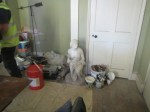
Inside several of the rooms have been divided, restoring their 18th century dimensions. Anna could walk through, placing furniture in imagination for Carol and Stuart, talking about decoration, wallpapers, the use of each room. We each had our own memories, of course. ‘Here,’ I would think, ‘I met Katharine, Kevin, Jim, Kirki, Diane. . .all the Fowles scholars who came.’ ‘Here is John, pouring coffee into my cup, agreeing that, yes, I should be his biographer.’ ‘Here is Liz, bending down to get to eye level with my 5-year old.’ Sometimes one or the other of us would go emotional and quiet and only by a hand clutched on an arm would anyone know. When we came upon the little statue of Demeter who had blessed John’s garden, we simultaneously burst out with excitement (to the crew’s real delight) because we had been wondering just that morning what had become of her. She seemed a sign of good there.
We had worried, what would we feel each with the sitting room gone and that upstairs back bedroom gone? But that was the strangest part. The “new” (or newly configured) rooms felt so much like that was the way they “should” be. Not only were they both snug but roomy, but they were filled with light in a way that Belmont had not been. Alcoves were opened up, fireplaces revealed, odd walls gone, windows revealed. There was—even in the mess of construction—an 18th century grace to the rooms. Where the old bedroom had been—sunlight and a direct, shimmering view of the sea. The proportions now were right and the whole house felt like it was waking up.
John’s writing room is being restored to its original use as the principle sitting room in the house. But some of his display cases and books will be returned to view and visitors will be able to access the history of his time in the house. It was always the best room in the house and, with those windows looking out on the sea and the newly-restored friezes of Coade Stone, it still will be.
Anna was convinced that her mother would have loved the results, would have loved to have lived in some of those rooms. I worked with John on some historical projects for the museum and I genuinely feel he would have been fascinated and proud.
We were even allowed to climb the scaffolding surrounding the observatory tower, which is now standing free of the house. We squeezed our way up the ladders and through hatches to get all the way to the copper-plated turret. What a view! One of the great moments of the project for the whole crew was when they removed wedged-in stones from the base of the turret and found that the 19th century mechanism still worked and the turret turned and opened for a telescope! John Fowles would have been so excited! He used to sigh and shake his head, saying, alas, the turret no longer worked.
The back lawn (badminton? strawberry teas?) is currently a wreck, a construction site. But the topsoil is piled into a mountain, waiting to be returned and re-landscaped. The view of the English Channel and the Cobb is open. The magic of the place is coming back.
Anna and I left to walk down the steep hill into Lyme Regis to the harbor. Lyme hasn’t changed much. We were exhilarated, talking over each other, making no sense. The Landmark Trust people will be wanting to talk with her again, I am sure.
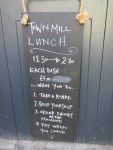
After lunch at the town mill bakery, we decided to walk along the sea front while the sun still shone so gloriously. We passed along the beach and boardwalk and came to the Cobb. At the entrance stood a yellow sign warning people not to go up onto it because of the stiff wind. We ignored it. I said, “Imagine. If that sign had been observed in the 1960s, there would have been no Sarah Woodruff in John’s mind and no French Lieutenant’s Woman. We would never have met!”
We walked up along the top of the Cobb, hanging onto each other. Because the wind WAS high. As we came to the end, we agreed that we should take the obvious photos—the Poor Tragedy at the end of the Cobb picture—because who knew if we would ever have the chance again? So, there was a couple taking pictures of each other. I walked up and asked, would they like me to take them both together? They were delighted. Afterwards I asked, would they be kind enough to take a few of my friend and me at the end of the Cobb?
“Oh,” the woman smiled knowingly, “Have you seen that wonderful film? The French Lieutenant’s Woman? Have you seen it?”
We smiled blandly. “Yes.” We replied. “A few times.”
-
- Belmont as I first saw it
-
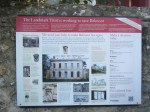
- The Landmark Trust is working to save Belmont. Work began October 2013.
-
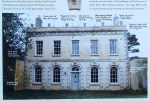
- Plans for the front
-
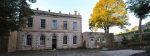
- Belmont at the beginning of restoration, 2013.
-
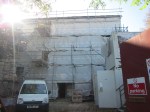
- Belmont under wraps, October 2014
-
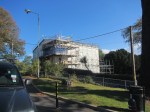
- rear of Belmont under wraps, from Cobb Road
-
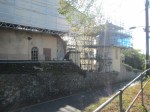
- The Victorian wing has been demolished, opening windows, revealing a gap between tower and main house that will frame a view of the sea.
-
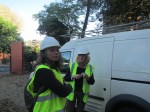
- Hard hats. Anna and Carol.
-
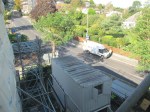
- View down onto Pound Street from the top of the scaffold.
-

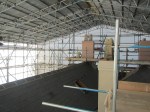
- Surveying the rooftop. New chimneys and new slate, including solar panels.
-
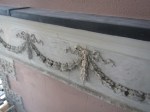
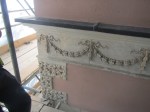
- Coade stone frieze at the top of the house, with repair.
-
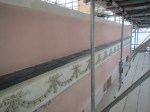
- The house will be this soft, chalky pink. Very 18th century.
-
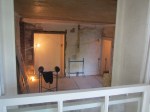
- The bedroom in which I would stay, from outside the window.
-
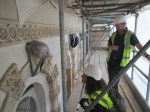
- A close view of Neptune. Stuart was so eager to show us how beautifully the Coade Stone had cleaned and the detail had been revealed.
-
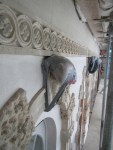
- One of the Amphitritons.
-
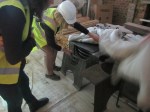
- Carol showing us all the fireplaces sourced for the house.
-

- The front room to the left of the door. Liz’s writing desk used to be here and people gathered here before going out.
-
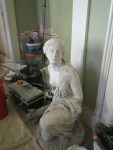
- Demeter! Still with the house.
-
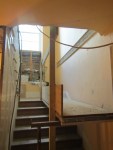
- The stairs. With the removal of the outside wing, the window can once again reach to the landing floor. But, where did the paintings go?
-

- A lovely snug sitting room carved out of the old dining room.
-
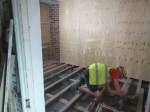
- The entrance to the rear sitting room (now gone) was to the left. Soon it will be windows and sunlight.
-
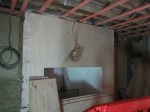
- The kitchen. Liz’s wallpaper remains in part. A new configuration is exactly what Liz always wanted but John wouldn’t!
-
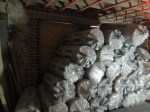
- Kitchen full of insulation. Note the steel (red) beams reinforcing the ceiling, aka the floor of John’s writing room above. All those bookcases sagged the floor!
-
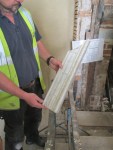
- Stuart showing us how beautifully the Coade Stone cleans to its original detail.
-
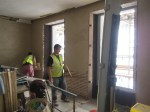
- John Fowles’ writing room. Many memories here.
-
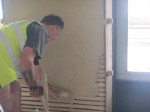
- New plaster with horse hair. The finish coat will be plaster and goat hair, since it’s finer.
-
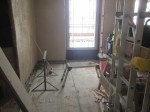
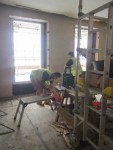
- John’s desk stood here.
-
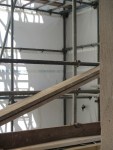
- This window was once the entrance to the Fowles bedroom. Now there is a new, beautifully proportioned bedroom and large bath, a fireplace and sunlight pouring in.
-
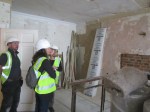
- This was Anna’s bedroom. Her children slept next door. The space works now.
-
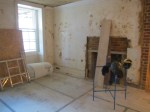
- The bedroom I stayed in–so much bigger and nicer now.
-
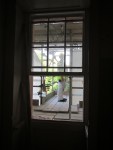
- View out the bedroom window.
-
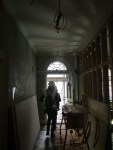
- Exiting the house through the old front door with its Paladian over window.
-
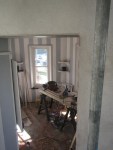
- Looking into the observatory tower room from the scaffolding.
-
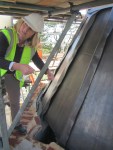
- Carol shows us how the turret mechanism works again.
-
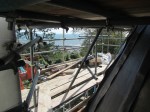
- The view will be so wonderful!
-
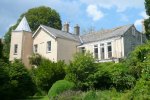
- The rear of Belmont in John Fowles’ day, showing the observatory tower and the Victorian wing that held the rear sitting room and bedroom. John’s writing room is to the right side.
-

- Rear of Belmont as it will be after restoration. Tower stands alone, Victorian wing is removed. An 18th century lovely seaside villa.
-
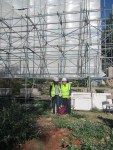
- Rear of Belmont from the “lawn.”
-
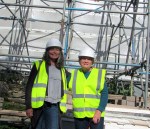
- Hard hats make your head hurt.
-
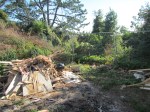
- The lawn and garden–awaiting new landscaping and love.
-
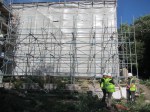
- Rear view of Belmont under construction.
-
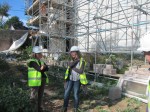
- You can see how the tower is separate now.
-
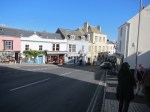
- Lyme Regis doesn’t change.
-
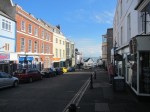
- Broad Street
-
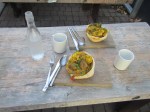
- Our lunch of curried veggies in a yummy bread bowl.
-
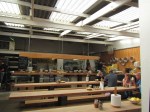
- Town Mill bakery
-
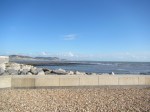
- From the beach towards Golden Cap.
-
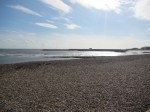
- From the beach towards the Cobb.
-
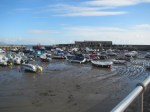
- Full moon tide is VERY low.
-
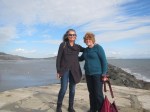
- Windswept at the end of the Cobb.
-
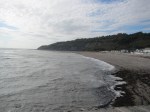
- View towards Monmouth Beach and the Undercliff from the top of the Cobb.
-
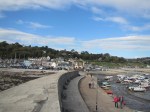
- View of Lyme Regis from the top of the Cobb.
-
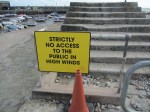
- We ignored this.
-
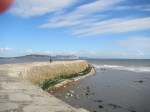
- Along the Cobb, low tide.
-

- textures of ancient rocks
-

- The light at Lyme
-

- Anna and Eileen, our day
 lettersfromatlantis
Terrific, really, really lovely. But what, for an American like me, is a cobb? A wave-breaker?
LikeLike
The Cobb is a great breakwater that basically protects the harbor at Lyme Regis. Its beginnings go back beyond memory and it is a beautiful curving wall against the sea. The memorable opening of The French Lieutenant’s Woman has the heroine standing at the end in a gale, staring out to sea. You can see it and its sinuous curves from Belmont which is at the top of a very steep hill.
LikeLike