
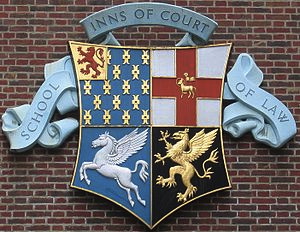
Still jet-lagged, we were off to London less than a day after landing back in the UK. Our hosting brother and sister, Russel and Christine, included us in a terrific all-day tour of the Inns of Court, the professional and fraternal organizations that have regulated the British legal profession since Tudor times. The Cranleigh 41 Club plus we two were bussed up to these historic, yet still active, campuses, where we met with Victoria, our fascinating and superb guide, to walk through rain and sunshine through the halls, churches, and courtyards of these wonderful places. Victoria has been a lawyer and was extraordinarily well versed in the history and details of the Inns. She also has a wonderful narrative ability to weave the story, walk, guide, and even cite legal precedence without missing a minute.
Long, long ago, the Knights Templar (1118-1308) owned these lands beside the River Thames inside The City of London. They were the order of knights that both prayed and fought at the time of the Crusades, charged with restoring the Temple in Jerusalem to the Roman Catholic Church. They also became essentially the bankers for the crowned heads of Europe and the crusading knights during the Crusade period, hence, they became an extremely wealthy order. When the city of Acre fell (1291)) and there was no longer a chance of taking back Jerusalem for the Church, the Templars were no longer necessary to these monarchs. So—surprise!—this wealthy order was charged (mostly falsely) with corruption and great excuses were made to disband the order. (Always follow the money in these historical matters.) In 1307-08 the kings of France and England and the pope dissolved and suppressed the order. The Grand Master was burned at the stake in France. So these lands in London reverted to the crown.
It’s just at this point that King Edward II decided that he didn’t want his lawyers trained by the Church (through Oxford and Cambridge, thus Canon Law) but to be trained by “good English judges” who knew the Common Law of England. Westminster, where these judges worked, was on the Thames to the west of the City, while most potential clients were downriver to the east. These Templar lands were situated right between the two, a perfect place to establish residences, chambers, and the training center for this new secular breed of lawyers. In 1608 James I gave the lands outright to the legal profession and the Inns of Court were forever established in buildings that had originally been Temple buildings.
Today there are four Inns, Grey’s, Lincoln’s, Middle Temple, and Inner Temple. By agreement, they all date themselves from about 1420. They are a captivating old world warren of courtyards , narrow passages, and mostly very old buildings. (Many, many television shows filmed here!) The legal profession in the United Kingdom is divided between barristers and solicitors. You deal with solicitors in every matter except actually going to court. Barristers are the ones privileged to advocate before a judge. And to be a barrister, you must be a member of one of these Inns of Court, even if you practice elsewhere in the country. The Inns therefore regulate their membership and the practice of law throughout the country. They “call members to the bar” after rigorous training and a series of twelve dinners in hall (yes, really) which creates a sense of the legal community, no matter where you practice. Then, if you are a member and work in London, chances are good you keep chambers in the Inn in which you are a member. The chambers are an extremely prestigious address and, listening to Victoria, there is a highly complicated protocol governing where a given barrister’s name appears on the board outside the chambers.
We began with coffee in the Hall of Grey’s Inn, an awe-inspiring affair straight out of a Harry Potter movie. The screen under the minstrel gallery was carved from one of the defeated ships of the Spanish Armada (1588) and portraits lined the walls on loan from the National Portrait Gallery. It was the first of many places that we saw memorial stained glass or plaques expressing gratitude to the American Bar Association for their great generosity in helping to restore these priceless heritage buildings after bomb damage during the 1941 Blitz in World War II.
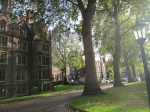
After gliding down passageways and crossing the courtyards of Grey’s Inn, we emerged into Lincoln’s Inn, a beautiful grassed quadrangle flanked by glorious brick halls and chambers. While Victoria had dozens of wonderful, pertinent anecdotes that peppered her remarks about the Inns, most were about prominent legal people that I didn’t recognize. However, Lincoln’s is famous for Tony Blair and his wife Cherie and for Margaret Thatcher—all members of Lincoln’s. Before leaving Lincoln’s we visited the undercroft of their church, a famous spot for the making of deals. Centuries ago, when a woman wanted to give up an unwanted baby, she would try to abandon it in this undercroft. If she was successful, the baby would become a foundling of the Inn and would be given the name of the Inn (eg. John Grey, Mary Lincoln), kept, and educated or apprenticed.
To walk across Fleet Street (once the center of journalism in the UK) towards the Middle Temple and Inner Temple, we stepped out into Carey Street by Chauncery Lane. In earlier generations, one exited from Bankruptcy Court into Carey Street, so an old English expression is about “being on Carey Street,” meaning being bankrupt. We also peered in the windows of Ede & Ravenscroft, the purveyors of all the wigs and gowns worn by barristers and solicitors throughout Britain. Right at 12:30 we arrived for lunch (now in the City of Westminster) at the Hall of the Middle Temple, the main hall of which dates from 1562 and has survived, except for the entrance (rebuilt after bombing in the Blitz), unchanged since then. We weren’t allowed photographs, since judges dining with other judges don’t want their pictures in the paper. I did sneak a couple from the minstrel gallery. But photos don’t do justice to this incredibly beautiful hall. On our day the long rays winter sunlight streamed in through the stained glass windows. The ceiling is a double hammer beam roof and priceless portraits and memorials are everywhere.
This is the hall where, at Candlemas in 1602, the first performance of Shakespeare’s Twelfth Night was offered at the Christmas Revels. To add to this extraordinary ambiance, we were seated and served at the High Table, on a magnificent oak table given by Elizabeth I and built into the hall, never moved since the early 1570s. Here dined people like Elizabeth herself, with Sir Francis Drake and Sir Walter Raleigh, both members of Middle Temple.
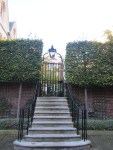
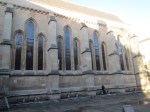
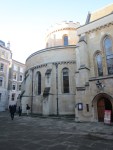
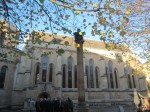
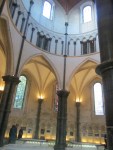
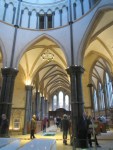
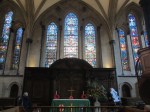
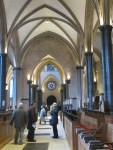
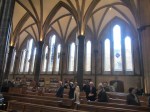
After lunch, a stroll down narrow passages to the Inner Temple where we visited the original Temple Church, built by the Templar Knights and now maintained by the Middle and Inner Temples. The Round Church, consecrated in 1185, was designed after the Church of the Holy Sepulchre in Jerusalem and is the oldest Gothic church in England. The longer Chancel was consecrated in 1240. The church has undergone many restorations. During the Blitz (May 1941) the building sustained terrible damage and wasn’t fully restored and reconsecrated until1958. Again, I’m proud to say that the Americans and the American Bar Association were major contributors to the restoration. The new, beautiful stained glass windows over the altar in one panal memorialize the bombing and fires of St. Paul’s Cathedral during that attack.
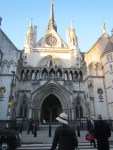
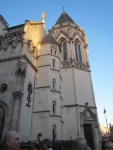
We ended our afternoon with an impressive visit to the Royal Courts of Justice, located just next to all these Inns. No interior photos, again, but we did get to see—just like on television—Courtroom 4, the most superior courtroom in the country.
-

- Entering Gray’s Inn. The Griffin over the gate is their symbol.

-
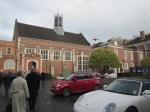
- The Hall of Gray’s Inn.

-
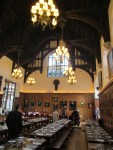
- Inside the hall, ready for coffee.
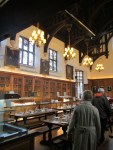
-

- Portraits . . .
-

- The memorial to the American Bar Association for their support in restoring the hall after damages in the war.
-
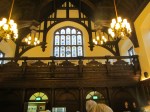
- This screen was carved from one of the Spanish ships defeated in the Armada, 1588.
-
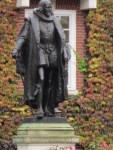
- Sir Francis Bacon, a Master of Gray’s
-
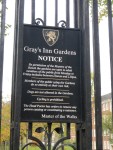
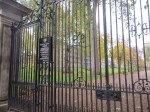
- Gray’s is known for their “walks” or parks.

-
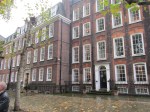
- This block of buildings recently appeared in Downton Abbey and is frequently filmed.
-

- Victoria in the rain
-
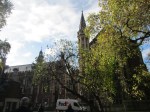
- Entering Lincoln’s Inn
-
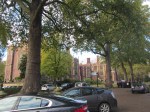
- Lincoln’s Inn
-
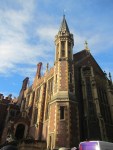
- Lincoln’s Inn Library
-
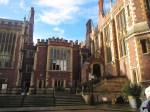
- Main Hall
-

- The pale brick building is the oldest of Lincoln’s Inn
-

- Their church
-

- Victoria lecturing in sunshine.
-
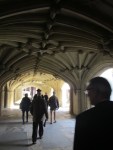
- The undercroft of the church, a famous “deal-making” place.
-
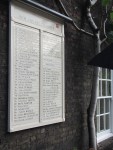
- Names on chambers
-
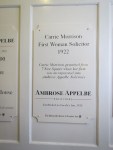
- Memorial to the first woman solicitor, 1922
-
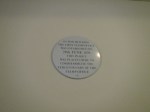
- This is the spot where the Stamp Act was executed–leading to the American Revolution

-
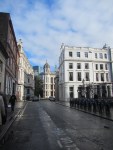
- Carey street for bankruptcy
-
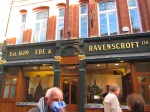
- Wigs and gowns monopoly at Ede & Ravenscroft
-

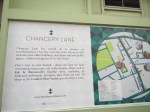
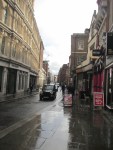
- Chauncery Lane
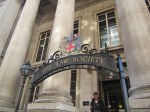
-
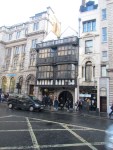
- Fleet Street

-
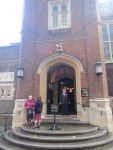
- Entrance to the Hall of Middle Temple, the symbol of this Inn is the lamb with a banner
-
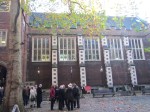
- This original section of the Hall dates from 1562 and has survived intact and unchanged.
-
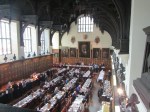
- Photograph from the minstrel gallery, doesn’t do justice to this breathtaking space.
-
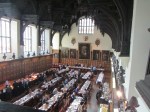
- The two men in the middle of the Head Table are Roger and Russ.
-
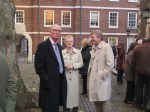
- Outside after lunch
-
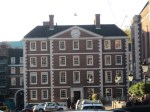
- Entering the Inner Temple
-
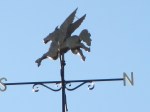
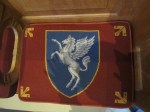
- The symbol of the Inner Temple is the winged Pegasus. Why?
-
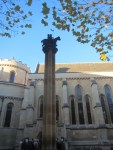
- The symbol of the old Knights Templar was one horse, two riders, which depicted the vows of poverty taken by this order. Through the years, the two riders became wings and the winged Pegasus evolved from the earlier sign.
-
- House of the Master of the Temple.
-
- The Chancel of the Temple Church
-
- The Round Church, 1185
-

- Inside the Chancel
-
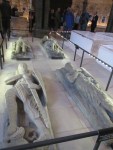
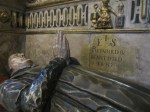
- Knightly effigies from medieval times.
-
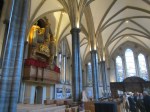
- The winged Pegasus of the Inner Temple
-

- The eastern windows installed in the 1950s
-
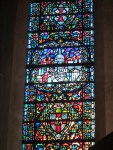
- This panel depicts the bombing and fires around St. Paul’s during 1941.

-
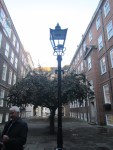
- Pump Court inside the Inner Temple. Henry Fielding (novelist) lived here.

-
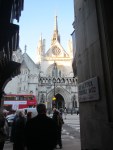
- The first glimpse of the Royal Courts of Justice.

 lettersfromatlantis