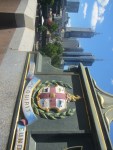
Melbourne. This city sneaks up on you.
We arrived Tuesday and our first view of Melbourne left us feeling deflated. The sky was overcast, the temperature was distinctly cooler. I think we must have been very tired, too. The visible architecture was a kind of very old-fashioned British regional from the 1930s to the ‘50s (sort of Raj-ish), slightly shabby and definitely stuffy, peppered with uninspired modern blocks, just like any urban place you’ve eve been. Even the famous Federation Square, which is outré-modernist, just seemed anomalous. (This perception would definitely change!) People on the street looked frumpy, or casual at best. After the electric glamour of Sydney, the fashionable people, and the rush you feel walking around in that powerful atmosphere, Melbourne felt—well, just dowdy.
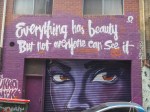
Ah. But then. You stumble down one of the many hidden “lanes” where the enormous student population hangs out in little hole-in-the-wall pubs and cafes (excellent food, by the way). You discover the exquisite promenade by the River Yarra. Looking from there, the perspective on the skyline shifts and it’s suddenly quite beautiful. You are shocked or made to laugh out loud by the graffitied street art. You begin walking through the Christmas crowds of this so-diverse multicultural city, ducking down arcades and into underground shops. You start traversing the city on the many “trams” (electric street cars) that rumble everywhere and constantly. The sun comes out! And Melbourne kind of unfolds for you.
Melbourne (on three days superficial acquaintance) strikes me as a kind of mash-up of a very old-fashioned British colonial with a distinctly edgy indie alternative. It has its own kind of vibe, different from Sydney, with whom it shares a rivalry that goes back at least to 1851, when the state of Victoria separated from New South Wales (where Sydney is). (And the very next year, gold was discovered here and the place exploded—how’s that for timing?) People here pride themselves on being the “cultural capital” of Australia—with great opera, theatre, and art galleries. It is very much a university town, so there are young people here from all over the world. There’s a wide ring of suburban parks, corporate buildings, apartments and outlying communities, all easy to access because of the extensive tram system.
On the advice of one of the other Sydney Opera House tour members, we found the excellent Immigration Museum on our first afternoon. Housed in the old Customs House, the interactive exhibits are honest about the historical racism of the settlement of Australia and the political struggles to come to terms with it and redress it. In the broadest sense, there were thoughtful questions asked (at levels accessible to school children as well as adults) and it was (long-term) thought-provoking. We Americans share such a similar history with Australia—possessing a land at all costs and treating the native inhabitants so shabbily. Struggling with racism and personal conscience. Like them, we are about space, the chance to have liebensraum and land in ways that not all nations can have. And now, the major problem of immigration, of other people from elsewhere—people who look and act differently than the whites who have been in power—who also want space and opportunity.
Random observations from a long day of walking and exploring while Roger had his excellent, intense day at RMIT University, the Royal Melbourne Institute of Technology (16,000 students): There is a sound-track to everything here that you can’t get from photographs—people playing music on the street, from didgeridoo and clapsticks to folk or rock guitar to pipes to voices singing carols. Australians, generally, do public spaces and people-friendly spaces so much better than we do! Not only are lawns and parks open to the public and set aside, there are always interesting things for kids to climb on or crawl through, and welcoming places for people to sit. They are inviting spaces and lots of them. People are NICE here. I am staggered everytime I get on a tram or bus that some young person leaps to give me their seat. The first time I thought, “Oh dear! Do I look that old?” But it is absolutely normal courtesy. Try this in Boston on the T ? Ha! Also, people on public transport actually chat to each other—to strangers. Amazing.
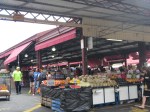
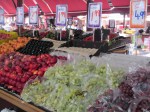
I watched as a queue (that’s “getting in line” for us) of families with little kids and babies in strollers lined up for two solid blocks, waiting patiently and pleasantly to take their kids up close to the story-telling windows of the Myer department store, decorated for Christmas with moving characters from “Santa and the Three Bears.” An Aboriginal busker played his didgeridoo to the crowd while they waited. This visit to Myer’s windows, apparently, is a time-honored Melbourne tradition. I stopped in to the Queen Victoria Market, a traditional open market from the late 1800s that’s still going strong. I love these old markets, so went through the building that faced on the street (Victoria and Elizabeth). Meat, fish, cheese, etc. but then passed through the back doors and—yipes! The market went on and on forever! Acres of sheds of fruits, veg, organics, preserves, then clothing, gee-gaws, kitchen ware, household goods, jewelry—on and on and on. Tempting and overwhelming.
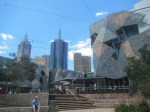
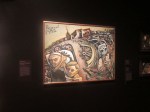
Friday, Roger could hardly drag himself out of bed, so we just took a tram to the suburban beach of St. Kilda, about 15 minutes away. We walked the lovely, sandy beach with a pier and yacht club and some shops. It isn’t honky-tonk and today it was quiet. Next week, when the kids are off school for the summer, the place will be heaving. In the afternoon, while Rog napped, I returned to Federation Square and the Ian Potter Centre for Australian art, a special part of the National Gallery of Victoria. In brilliant sunshine, the place was filled with people. Music, concerts, carols, kids playing games, folks having a drink outside. Fed Square is a gloriously designed space that communicates with the main street by the river (Flinders St.) and also with the river itself. The cricket ground and stadium are visible and very close, just across the Yarra River. The Ian Potter Centre houses all the indigenous art, along with the work of Australian artists of the colonial, 19th, and 20th centuries. I felt I achieved the first inklings of what the Aboriginal artists were saying—certainly not a profound understanding, but a start. The mainstream artists are interesting as they worked in local ways to fit into the major schools of international art. There is, for instance, a significant group of artists who studied in Paris just before the turn of the 20th century and interpret Impressionism distinctively Australian ways.
An afternoon well spent.
-

- First glimpse of Federation Square
-
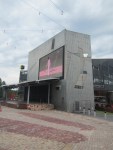
- Watching a young Aussie cricket player bowl his first 100. He was all over the news that night.
-

- Federation Square
-
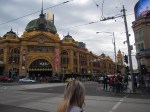
- Flinders Street Train Station
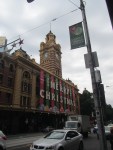
-
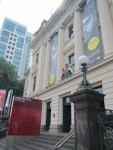
- The old Customs House now houses the Immigration Museum
-
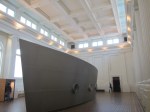
- Customs House interior
-

- interactive exhibits
-

- What it took to get here for immigrants in the late 18th century
-
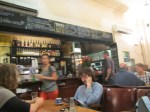
- Tiny pub down a lane.
-
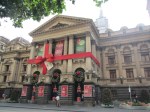
- City Hall
-
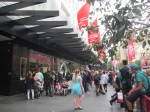
- Families waiting patiently in queue . . .
-

- to show their children the Christmas windows at Myer
-
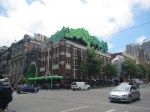
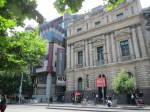
- RMIT, where Roger spent his day among Project Management colleagues
-
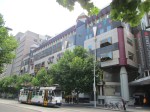
- modernistic architecture of RMIT
-
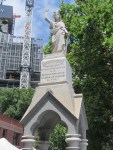
- An ornate public water drinking fountain, the gift of the WCTU (Women’s Christian Temperance Association) of Victoria, late 19th century
-
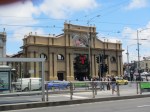
- The Queen Vic Market, the sheds and stalls cover a vast area!
-
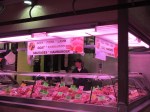
- butcher
-
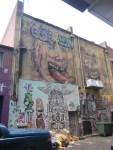
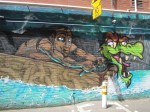
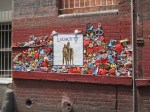
- Street art is everywhere



-
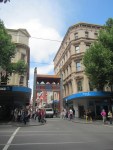
- Chinatown
-
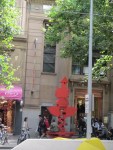
- Much public art has an indigenous flavour to it.
-

- The horse is a working weathervane.
-
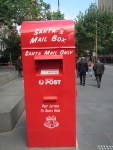
- Observation of Christmas is official.
-
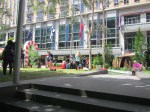
- City Hall lawn decorated for Christmas.
-
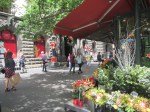
- Outside City Hall
-
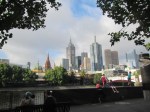
- Southgate embankment on the Yarra River, looking towards Prince’s Bridge
-
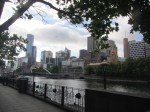
- Yarra River, south embankment, looking towards the footbridge
-
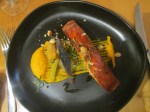
- Salmon dinner at Pure South, where all food is sourced from Tasmania.
-
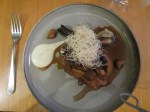
- Tasmanian lamb, tender beyond belief!
-

- Roger’s RMIT colleagues at Pure South, Derek and Christine. A great evening!
-
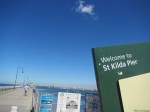
- St. Kilda is merely 15 minutes from town.
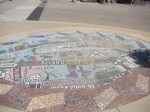
-

- “The Kiosk” at the end of the pier
-
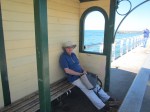
- Roger was pretty exhausted this morning.
-
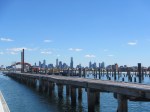
- Melbourne skyline in the distance
-
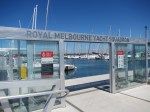
- Royal Melbourne Yacht Club, but their piers were open to walkers.
-
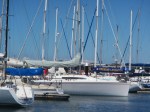
- As Roger observed: “No small boats.”
-
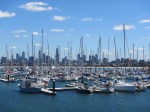
- At anchor.

-

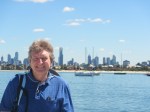
- A colony of Little Penguins lives in the pier breakwater. It was mid-day and hot–no penguins about.
-

- Just this guy, a big black swan.
-
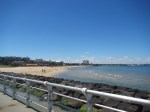
- The beach at St. Kilda
-
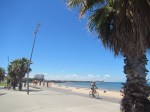
- When the children are off for summer holidays beginning next week, this beach will be wall-to-wall people.
-
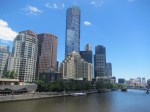
- Back in Melbourne, looking towards the south embankment from the Prince’s Bridge
-
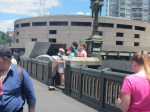
- 92 F. and these caroling kids are singing about Good King Wenceslas and how the “snow lay round about, deep and crisp and even”!
-
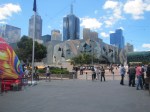
- Federation Square on a brilliant Friday afternoon
-
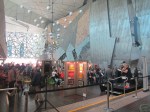
- Free summer concert series, enthusiastically attended in this wonderful atrium space
-
- View out window of the Ian Potter Centre. The spire is the National Gallery of Victoria
-
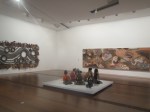
- Ian Potter’s ground floor is devoted to Indigenous Art

-
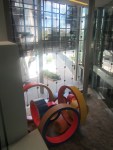
- From upper floors, looking into the atrium
-

- Joseph Brown, who encouraged Australian artists, saved their work, built a great collection, and donated it to the State of Victoria. The collection is named for him.
-
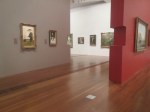
- 19th century rooms
-
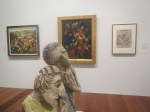
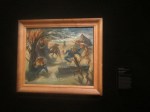
- An exhibition devoted to the Boyd family, a dynasty of Australian artists, many prominent ceramicists.
-
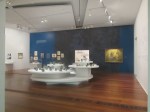
- More Boyd ceramics.
-
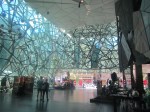
- The Atrium after the concert. A gorgeous, flexible public space.
-
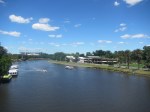
- Looking down the Yarra from Prince’s Bridge. This is the Sports Precinct, immediately next to Arts and Federation Square and a couple of gorgeous parks. The cricket ground to the right and the stadium beyond.
-
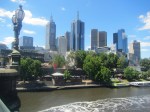
- Skyline of Melbourne from south side of Yarra River. Federation Square through the trees.