Category Archives: Uncategorized

Cairns, North Queensland: Tales of the Trailing Spouse, Part XVII

When Roger told me we were coming to Australia to include Sydney and Melbourne technical universities on his sabbatical stops, I replied, “Not unless we can visit the Great Barrier Reef.” He explained that this was a 3 hour plane trip from Sydney,–to which I answered that we were traveling 20 hours from the East Coast of the US, so what was another 3 hours?

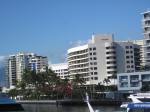
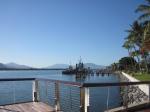
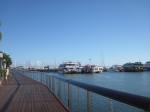
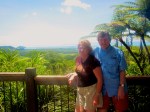
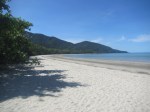
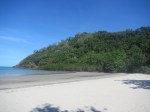
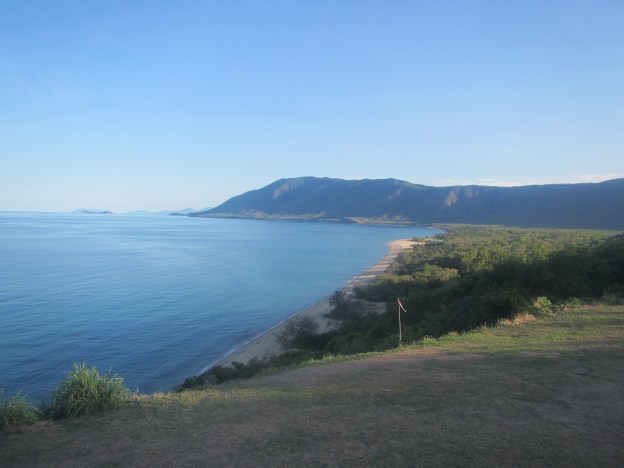
And so, here at the end of this Australian adventure, we have spent 3 + days in Cairns in Northern Queensland. Tomorrow is the solstice and we are only a few days off the Equator—so, it’s HOT. But Cairns and this whole coastal area is gorgeous. A beautiful coast, surrounded by mountains and rain forest. It’s totally a tourist resort, a lovely one—since they put in an airport about 30 years ago, the place has exploded. People come here from all over Australia and the Pacific countries. We have considered this holiday time, so have spent our time on various “adventure” tours.

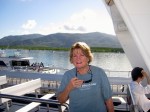
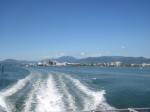
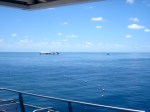
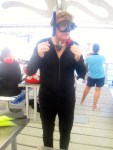
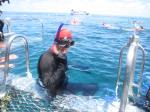
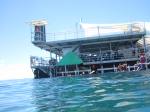
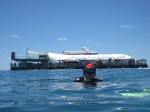
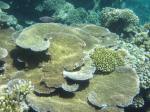
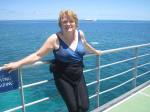
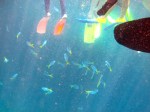
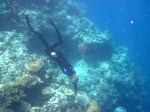
Day 1: We did the reef, choosing one of the cruise operations where a fast catamaran takes you out to the outer reef. They have permanent platforms built for divers, snorkelers, and just visitors. We were outfitted with jellyfish suits, fins, and snorkel equipment. Spent the morning exploring the reef surrounding the platform. After lunch, a guide (Eric) took us by boat out to a deeper reef wall and we spent our hours drifting over the reef along an underwater cliff that plunged deep into the sea. This is a great place for fish to feed so you are constantly in schools of bright tropical fish. I was taking photos, so I rolled back the mitts to the suit to have the freedom of my hands. In the soupy waters, filled with yummy little things for the fish, I suddenly thought my hands were on fire! Stupid me. It was those microscopic jellyfish and, boy, do they hurt! I quickly covered up my hands and was really grateful for the suit over the rest of my body. Nonetheless, it was a super day and one I’ve always longed to do.

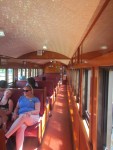
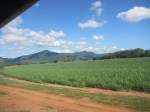
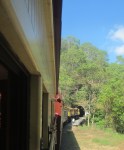
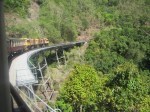
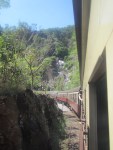
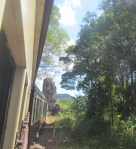
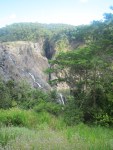
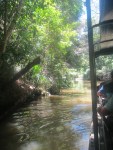
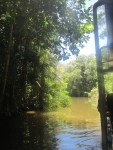
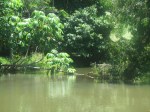
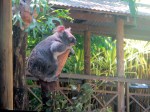
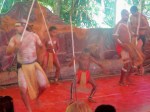
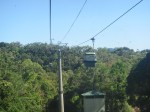
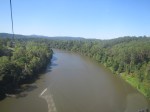
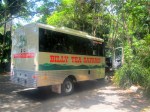
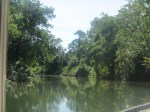
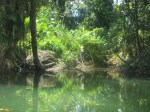
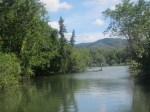
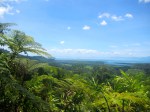
Day 2: We took the Kuranda Scenic Railway up the mountains into the rainforest to the village of Kuranda. This entire coastal area is mountainous and practically impenetrable rain forest and back in the 19th century, even more so. However, there was a major gold strike up in the mountains in 1873 and, of course, thousands of men rushed it. The area was so forbidding that some people starved and help couldn’t get to them. So in 1887 they began building a narrow gauge railway up the mountain. As a feat of engineering, it’s pretty phenomenal, especially for those times—37 kilometers of track laid by hand with all the tunnels and cuttings dug by hand, bridges thrown over gorges, etc. The trip takes about an hour and a half, with a couple of lookout stops. The village of Kuranda is an old indigenous community. Lots of tourist stuff. We choose to do a short trip via Duck boat through the rainforest and on to the Barron River, and some indigenous presentations of dance, music, and weaponry. At the end of the day, we returned to the flatlands far below via the Skyrail over the rainforest. It’s interesting to see the canopy of the forest, but—omg—it’s just green, green, green out to every horizon.

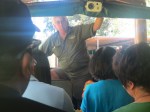
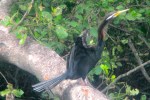
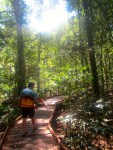
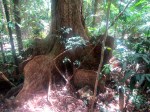
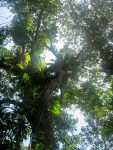
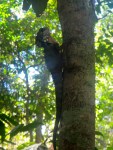
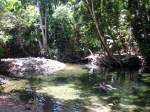
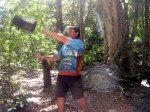
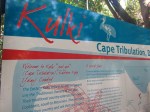
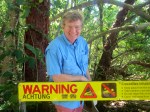
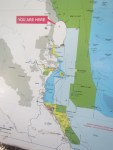
Day 3: We took a tour up to the Daintree Rainforest, which is considered the oldest rainforest on the planet. Our guide, Finn, showed up with an all-terrain vehicle that was kind of a cross between a tourbus and a hummer. Very comfortable, but also he was able to go on unpaved tracks deep into the forest. He was our best guide yet, very experienced and  talking us through everything from sugarcane fields, to small towns, to coasts, to walks through the forest, to a freshwater pool deep in the national park where we could swim. We toured to Cape Tribulation (where Captain Cook wrecked and was trapped inside the reef in the 1780s) and beyond. Finn even cooked our lunch! So we saw hours and hours of terrain and got a little acquainted with the territory. A long, brilliant day.

Yes. I know there’re too many photographs! But this is the end of the trip and you can skip if you want.

Meeting in Sydney: Tales of the Trailing Spouse, Part XVII

We are rounding past the halfway point of our Australian experience and have spent a few days in Sydney, shopping, touring from the top of a double-decker bus, enjoying the city. When we arrived from Melbourne, Roger took off his business shirt and put on one of his Hawaiian summer shirts, declaring: “I am officially on vacation!”

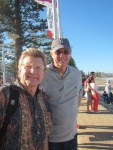
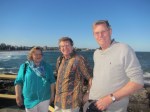
The topper of this interlude was our evening with Rob and Cathy Cowley at a great seafood restaurant in Manley. Rob is the son of Alf Cowley, the pilot who flew with my father-in-law, Ron Warburton, in the RAF during World War II. Ron was the Flight Engineer of a Lancaster bomber. His job was basically everything. The Flight Engineer has been replaced by computerization today. During the war, the pilot (that was Alf) flew the plane, and the flight engineer (that was Ron) planned, corrected, rescued, helped to navigate, and did the trouble-shooting. The pilot and the flight engineer were trained together as partners, so Alf and Ron were buddied on 23-plus missions over Germany and the Netherlands during 44-45. Only a third of Bomber Command guys survived, so these two were the elite. There are only 3 of their squadron left alive today.

Ron and Alf (who came home to Australia after the war) stayed in touch. When Roger’s dad, Ron, wrote a book about his experiences a few years back, and Roger published it, Alf supplied his logbooks, photographs, and memories. The two have had more contact since then and Rog has often had email exchanges with Rob Cowley, the son.

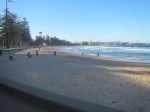
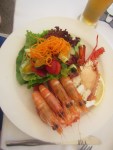
So it was pretty astounding to hop on the Manly Ferry from Circular Quay, cross Sydney Harbor to Manly Bay, and walk up the Curso to meet Rob and his wife, Cathy. Even more to feel immediately at ease, as though with old friends. We walked around the beach and dined at the superb Fish Café—oysters, prawns, and Barramundi (local and wonderful). Driving back to the hotel in their car, Rob placed a phone call to Alf, who lives in a nursing home (he’s 94). And there he was! Asking about Ron and Margaret, glad to talk to us, and so pleased that we’d all met up. Small world. But if not for those guys, none of us, nor our children, would be here.

 

Melbourne, Australia: Tales of the Trailing Spouse, Part XVI

Melbourne. This city sneaks up on you.

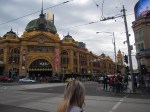
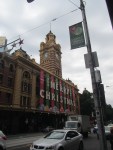
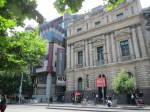
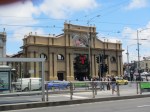
We arrived Tuesday and our first view of Melbourne left us feeling deflated. The sky was overcast, the temperature was distinctly cooler. I think we must have been very tired, too. The visible architecture was a kind of very old-fashioned British regional from the 1930s to the ‘50s (sort of Raj-ish), slightly shabby and definitely stuffy, peppered with uninspired modern blocks, just like any urban place you’ve eve been. Even the famous Federation Square, which is outré-modernist, just seemed anomalous. (This perception would definitely change!) People on the street looked frumpy, or casual at best. After the electric glamour of Sydney, the fashionable people, and the rush you feel walking around in that powerful atmosphere, Melbourne felt—well, just dowdy.

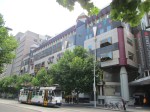
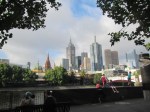
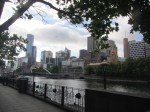
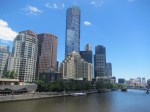
Ah. But then. You stumble down one of the many hidden “lanes” where the enormous student population hangs out in little hole-in-the-wall pubs and cafes (excellent food, by the way). You discover the exquisite promenade by the River Yarra. Looking from there, the perspective on the skyline shifts and it’s suddenly quite beautiful. You are shocked or made to laugh out loud by the graffitied street art. You begin walking through the Christmas crowds of this so-diverse multicultural city, ducking down arcades and into underground shops. You start traversing the city on the many “trams” (electric street cars) that rumble everywhere and constantly. The sun comes out! And Melbourne kind of unfolds for you.

Melbourne (on three days superficial acquaintance) strikes me as a kind of mash-up of a very old-fashioned British colonial with a distinctly edgy indie alternative. It has its own kind of vibe, different from Sydney, with whom it shares a rivalry that goes back at least to 1851, when the state of Victoria separated from New South Wales (where Sydney is). (And the very next year, gold was discovered here and the place exploded—how’s that for timing?) People here pride themselves on being the “cultural capital” of Australia—with great opera, theatre, and art galleries. It is very much a university town, so there are young people here from all over the world. There’s a wide ring of suburban parks, corporate buildings, apartments and outlying communities, all easy to access because of the extensive tram system.

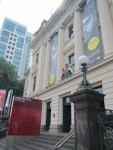
On the advice of one of the other Sydney Opera House tour members, we found the excellent Immigration Museum on our first afternoon. Housed in the old Customs House, the interactive exhibits are honest about the historical racism of the settlement of Australia and the political struggles to come to terms with it and redress it. In the broadest sense, there were thoughtful questions asked (at levels accessible to school children as well as adults) and it was (long-term) thought-provoking. We Americans share such a similar history with Australia—possessing a land at all costs and treating the native inhabitants so shabbily. Struggling with racism and personal conscience. Like them, we are about space, the chance to have liebensraum and land in ways that not all nations can have. And now, the major problem of immigration, of other people from elsewhere—people who look and act differently than the whites who have been in power—who also want space and opportunity.

Random observations from a long day of walking and exploring while Roger had his excellent, intense day at RMIT University, the Royal Melbourne Institute of Technology (16,000 students): There is a sound-track to everything here that you can’t get from photographs—people playing music on the street, from didgeridoo and clapsticks to folk or rock guitar to pipes to voices singing carols. Australians, generally, do public spaces and people-friendly spaces so much better than we do! Not only are lawns and parks open to the public and set aside, there are always interesting things for kids to climb on or crawl through, and welcoming places for people to sit. They are inviting spaces and lots of them. People are NICE here. I am staggered everytime I get on a tram or bus that some young person leaps to give me their seat. The first time I thought, “Oh dear! Do I look that old?” But it is absolutely normal courtesy. Try this in Boston on the T ? Ha! Also, people on public transport actually chat to each other—to strangers. Amazing.

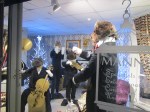
I watched as a queue (that’s “getting in line” for us) of families with little kids and babies in strollers lined up for two solid blocks, waiting patiently and pleasantly to take their kids up close to the story-telling windows of the Myer department store, decorated for Christmas with moving characters from “Santa and the Three Bears.” An Aboriginal busker played his didgeridoo to the crowd while they waited. This visit to Myer’s windows, apparently, is a time-honored Melbourne tradition. I stopped in to the Queen Victoria Market, a traditional open market from the late 1800s that’s still going strong. I love these old markets, so went through the building that faced on the street (Victoria and Elizabeth). Meat, fish, cheese, etc. but then passed through the back doors and—yipes! The market went on and on forever! Acres of sheds of fruits, veg, organics, preserves, then clothing, gee-gaws, kitchen ware, household goods, jewelry—on and on and on. Tempting and overwhelming.
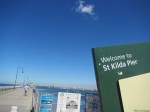
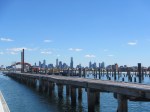
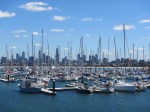
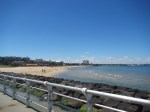
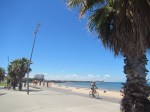
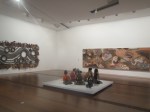
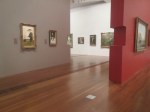
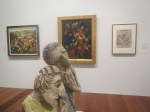
Friday, Roger could hardly drag himself out of bed, so we just took a tram to the suburban beach of St. Kilda, about 15 minutes away. We walked the lovely, sandy beach with a pier and yacht club and some shops. It isn’t honky-tonk and today it was quiet. Next week, when the kids are off school for the summer, the place will be heaving. In the afternoon, while Rog napped, I returned to Federation Square and the Ian Potter Centre for Australian art, a special part of the National Gallery of Victoria. In brilliant sunshine, the place was filled with people. Music, concerts, carols, kids playing games, folks having a drink outside. Fed Square is a gloriously designed space that communicates with the main street by the river (Flinders St.) and also with the river itself. The cricket ground and stadium are visible and very close, just across the Yarra River. The Ian Potter Centre houses all the indigenous art, along with the work of Australian artists of the colonial, 19th, and 20th centuries. I felt I achieved the first inklings of what the Aboriginal artists were saying—certainly not a profound understanding, but a start. The mainstream artists are interesting as they worked in local ways to fit into the major schools of international art. There is, for instance, a significant group of artists who studied in Paris just before the turn of the 20th century and interpret Impressionism distinctively Australian ways.

An afternoon well spent.


Sydney, Part 1: Tales of the Trailing Spouse, XV

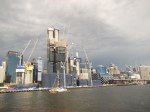
Sydney, Australia. Lord. What an incredible, beautiful place! The harbor is vast and gorgeous, the city vibrant and cosmopolitan. It can take your breath away just to look around.

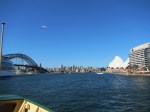
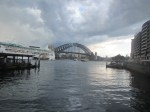
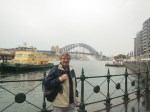
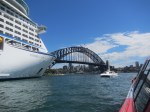
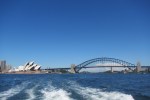
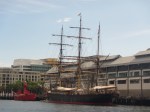
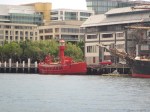
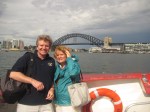
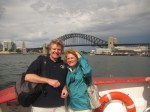
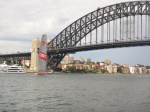
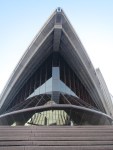
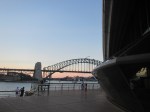
After leaving Rhode Island, via Boston, we were able to stopover for a few hours with our son, Nye, at Manhattan Beach in LA. After an endless flight from LA in which we lost a day, we arrived in Sydney on Sunday morning. Two days here, I still have little sense of the time. The weather is hot, humid but breezy, with rain storms that blow up suddenly, drench everything, and then blow away just as quickly, leaving an electric blue sky. We are staying just by Circular Quay, the original site of the 1788 founding as well as today’s transit terminus and the central people-friendly space in the city. Stand at the ferry landing and to one side is the Sydney Harbor Bridge (1932) spanning the harbor, to the other side are the gigantic shell-like curves of the Sydney Opera House (1973). Boats, ferries, cruise ships, trains, and hundreds of people—some hurrying to some destination, some just taking photographs or drinking in the glory. Our friend Gareth had warned us that you can’t stop taking photos, and it’s true for me. Every moment, every subtle change of the light and I’m shooting again.

We explored The Rocks and the Circular Quay on our first afternoon. Today these are heritage districts filled with shops, pubs and restaurants, and street markets and fairs. But one has to think back to the people of what is called the First Fleet—11 ships carrying about 1,000 people (over 750 of them convicts) and provisions who had to carve out a life here. It must have seemed like the end of the world to them and a very rough challenge indeed.

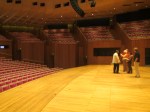
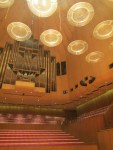
Yesterday (Monday, I think) we began with the special Back Stage Tour of the Opera House that I had booked before leaving the US. I figured, correctly, that the 7 am start for the tour wouldn’t bother us since we would have no idea what time it was anyway. So at 6 am we were strolling the nearly-deserted quay under a grey, threatening sky. The tour was wonderful and exhaustive. For an hour and a half we roamed in a small group of 5 (with Darryl, our guide) through all the five performance spaces of this glorious building, visiting orchestra pit and fly tower, stages and dressing rooms, examining the machinery of set changing and lights, and ending with a big breakfast in the Green Room, all the while listening to Darryl’s anecdotes of the workings of the House and the performances of the Greats through the years.

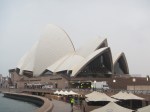
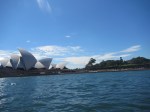
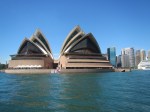
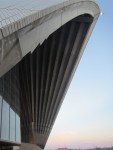
The Opera House was designed by Jorn Utzon in the 1960s but not completed until 1973. Most Australians regard it as, not only an extraordinary performance venue (over 2000 performances a year, totally across all the genres!), but as the harbinger of “the beginning of the new, modern Australia,” as Darryl put it. It’s such a bold design, unlike anything before—or after—it. Apparently, 60% of the world’s population can recognize and identify it, making one of those rare global icons like the Eiffel Tower or the Statue of Liberty. I found the exterior spaces as compelling as the interior—as many as 100,000 people can gather in the forecourt of the Opera House to celebrate an event.

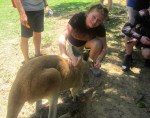
Immediately after our tour, we jumped on a “hop-on-hop-off” cruise boat and spent the rest of the day cruising Sydney Harbor. It’s a huge body of water with many, many bays and suburban “villages” that are all part of greater Sydney. We stopped for a couple of hours at the Taronga Zoo, taking the cable car up from the dock and working our way down the steep hillside. We signed up for the tour of the Australian animals and met our volunteer guide, Cookie, a sprightly, wise, elderly woman who introduced us to the many distinct, even strange animals that can be found nowhere else.

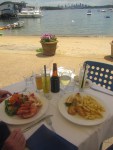
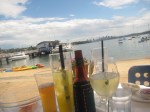
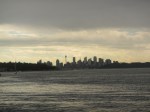
Our next “hop off” was Watson’s Bay, where we had a fabulous seafood lunch right on the beach at Doyle’s Restaurant, an institution here since the 19th century. You can see right up the long harbor to the skyline of Sydney in the distance. It’s breathtaking. Our journey back up the Harbor was in both sun and rain. But we stayed aboard to see Darling Harbor and the other sights. Back at Circular Quay we ended our day with gelato, strolling, and just watching the lights come up in Sydney Cove.

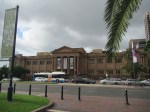
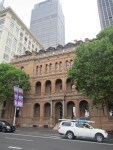
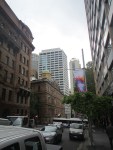
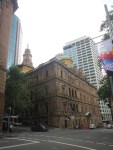
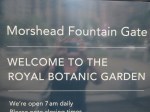
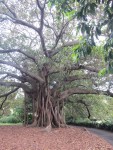
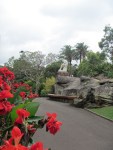
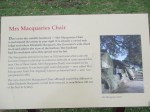
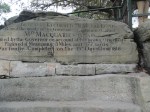
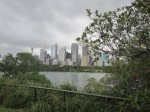
Today, as Roger went off to his Australian colleagues at the technical university, I roamed the Royal Botanical Gardens, walking out to Mrs. Macquarie’s Chair, a lookout carved in the rocks for the wife of an early Royal Governor (1810-1821). Thence, just a random walk through the central business area. I find the architecture here so satisfying. It is visually layered, as if through the historical eras. There’s the really fine Victorian buildings of old Sydney, all built of this warm golden brown sandstone and beautifully preserved. There’s the occasional throwback to colonial architecture, even hinting of similarities to the tropics like the Caribbean. And over all, there are the gleaming, handsome skyscrapers and some Art Deco. Add the frequent views of the water and the palm trees and greenery, and it all works together in such a compatible way.

We dine tonight with Roger’s colleagues, then are off to Melbourne in the morning. However, we’ll return here for the weekend. I look forward to it!


Cardiff, Wales: Tales of the Trailing Spouse, Part XIII

[This will appear out of order, since something technological went awry. It’s supposed to be the penultimate post of this section. However . . . ]

——————————————–

“Omigod!,” exclaims Roger. I have NO idea where I am!” We are driving at night, up the A48 into Cardiff, Wales. This should mean that we are on the Newport Road into town, passing familiar houses, the turn-off to Roger’s high school, an overpass with a beer advertisement, etc. Instead we are surrounded on all sides by neon-lit shopping malls, block after block. It’s stunning. It’s kind of American. It’s entirely unfamiliar.

But a few more blocks and we’re back among the 19th century row houses (terraced houses, here) and it looks as we remember it. The shopping malls, the expansion, the sense of commercial development, however, are all marks of the new Cardiff. Like me going back into Washington, D.C. and invariably getting lost, Roger can barely recognize his hometown and it’s only been a very few years since we were here.

Cardiff has emerged from its post-industrial torpor. It was once a smokestack city with booming docks along the Bristol Channel, a mighty port city shipping coal from the Welsh valleys out to power the world. After the war, as the mines closed one by one, Cardiff slumped into a kind of obsolesce, still cultured and proud, but its elegance a bit shabby. When I first knew it in 1970 and long after, it felt like such a regional backwater and so old-fashioned.

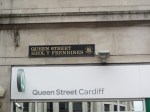
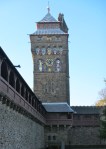
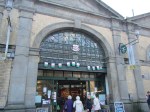
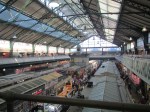
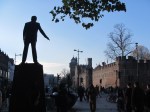
The city has reawakened. It has changed, but kept its soul. Rog observes that it’s a good example of what can happen to a city when government and citizenry invest in infrastructure. The bay area has been redeveloped with museums, houses, shops, and the very beautiful and very “green” Welsh Assembly (the capital of the national government). The River Taff—formerly ink-black with coal run-off—now runs clean. The older buildings, like the gorgeous Civic Center complex, have been cleaned while they sit shoulder to shoulder with architecturally innovative modern skyscrapers. New hotels, new restaurants. The university expanding. Beautiful and futuristic, the Millennium Stadium is right in the city, visible from all over, third largest in Europe (a capacity of nearly 75,000). The downtown shopping district spreading out from Queen Street and well up to Cardiff Castle is entirely pedestrian now, filled with people, bright with upscale shops, the best department stores, and little boutiques. The big city market and the arcades are still there, along with the churches, and newly-developed parks and outdoor space for sitting or meeting up.

Roger can recall in the 1960s when Queen Street was the first to be recreated as a pedestrian street. His father was a City Councilor then and brought home the architectural plans of the proposed urban changes. The proposal caused huge controversy and many people were against the notion, but it was in fact very forward-thinking. Today, the complex of pedestrianized streets in the center of the city is such a welcoming, commercially successful, people-friendly space. I dragged Roger out to a pub after a tiring day he spent working at the university and he was astonished walking down the middle of the High Street into St. John’s at the life in the streets and in businesses.

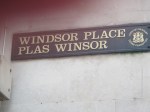
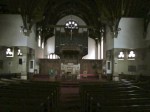
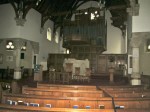
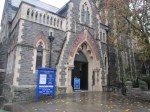
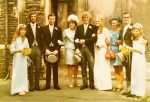
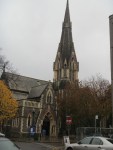
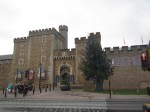
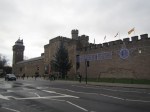
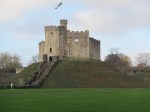
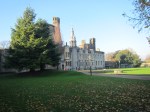
My sister-in-law Hazel and her two boys, Patrick and Eliot, now live in Cardiff. My thought, as we ate dinner with them early in this week, was that they are making a life in a place that has exciting possibilities and new cultural energy. It’s very positive. While Roger has worked and lectured at Cardiff University this week, I’ve reacquainted myself with this new/old Cardiff. I toured Cardiff Castle, wandered the streets, shopped. Most important for me, as it turned out, was coming upon Windsor Place off of Queen Street and discovering the church where I was married in August 1970.

In those days it was a Presbyterian church and the minister was Mr. Norman Birnie, the father of one of Roger’s dearest childhood friends, Alasdair. It was Mr. Birnie who would marry us and then (with his wife, Felicite) become a dear friend for the rest of their lives. He was a compassionate and progressive man—to the point where he was highly criticized by some parishioners for performing a wedding ceremony for two people who had been divorced. So, anyway, I like to think that he would be as pleased as I was to discover that Windsor Place Presbyterian had transformed into the City United Reformed Church—its motto: “Open Hearts and Open Minds.” It’s a place of progressive active outreach to all populations that celebrates diversity and reconciliation. I’m told that during the city’s Gay Pride Parade, the church was the rallying point.

The place was humming with people, but the sanctuary was dim and empty, so I thought I’d look in. I didn’t expect to feel such emotion there as I did. I felt like someone punched me in the chest. It wasn’t that I felt sentimental or romantic about my wedding. It was more that I suddenly was aware of so many losses and the passage of time. I didn’t think about Roger too much, I guess because I still have him. But I was powerfully aware of losing my parents, thinking of them so young and so happy on my wedding day. Alasdair, too, is gone, as are Norman and Felicite Birnie, his parents. Roger’s grandmother and aunts. Roger’s mum and dad, who were still in their forties on that day, are now aged. The family who gathered, the few friends who could make it—we have all come to the last years of our careers. We have grown children. All this felt very concentrated as I sat in that room.

Cardiff has become even more a family magnet since Roger’s sister Hazel and her youngest, Eliot, have moved back here. Her eldest, Patrick, has made his home in Cardiff since he finished university here. Our dear friends, Gareth and Liz, live “up the valleys” in the village of Maesycwmmer. Gareth and Roger go back to childhood, to days as choirboys at St. James’ and their afternoons at the matches at the Arms Park. So, while Rog commutes to the University of Cardiff for a few days, I am happily among friends.

Family Farewells: Tales of the Trailing Spouse, Part XIV

I am coming to the end of the British chapter of the sabbatical. I feel both like I just arrived here and also like I’ve been here forever. In recent years I have become more like Roger, who has emotional ties to two cultures, Britain and America. For a long time after we married, I loved the family and loved to visit here, but in my mind they were his family. After my parents died—and I’m an only child—my sense of belonging changed. On my birthday in May 2011, my nephew Robert arranged a birthday dinner for me. I recall thinking that, although these people might be Roger’s relatives, they were my family. It’s been a subtle, but real, distinction for me. I’ll always feel grateful to Rob for that moment.

Our near departure has brought us full circle back to Surrey and Sussex to see Roger’s parents and spend time with the Cranleigh family. The folks have been squeezing us into busy pre-holiday schedules. To be included in what I suppose is “ordinary”—an evening at our nephew’s home, our grand niece Hetty’s visit to Father Christmas, a pub meet-up with friends and family—these take on a special sweetness right now. Rob, on top of the demands of his full-time career, is a professional referee for rugby (Level 3) and Rog has had the treat of going with his brother to watch Rob working a match.

We fly home for a break just before Thanksgiving and then I shall take a two week hiatus on this blog. A new chapter of the sabbatical opens on December 5th, so (if you’re still with me) check back around December 10th or 11th to see where the trailing spouse will find herself.

Inns of Court, London: Tales of the Trailing Spouse, Part XII

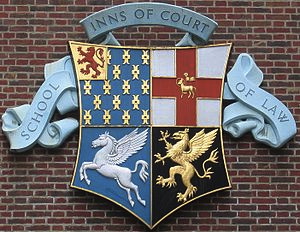
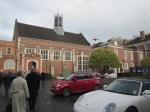
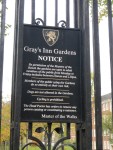
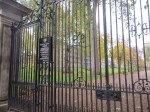
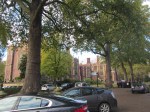
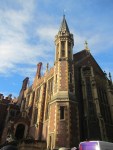
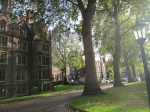
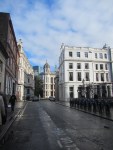
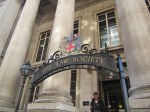
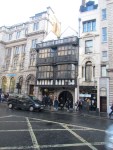
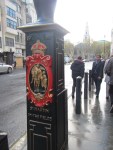
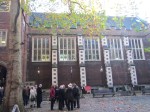
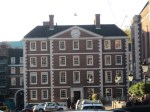
Still jet-lagged, we were off to London less than a day after landing back in the UK. Our hosting brother and sister, Russel and Christine, included us in a terrific all-day tour of the Inns of Court, the professional and fraternal organizations that have regulated the British legal profession since Tudor times. The Cranleigh 41 Club plus we two were bussed up to these historic, yet still active, campuses, where we met with Victoria, our fascinating and superb guide, to walk through rain and sunshine through the halls, churches, and courtyards of these wonderful places. Victoria has been a lawyer and was extraordinarily well versed in the history and details of the Inns. She also has a wonderful narrative ability to weave the story, walk, guide, and even cite legal precedence without missing a minute.

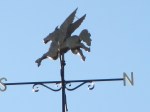
Long, long ago, the Knights Templar (1118-1308) owned these lands beside the River Thames inside The City of London. They were the order of knights that both prayed and fought at the time of the Crusades, charged with restoring the Temple in Jerusalem to the Roman Catholic Church. They also became essentially the bankers for the crowned heads of Europe and the crusading knights during the Crusade period, hence, they became an extremely wealthy order. When the city of Acre fell (1291)) and there was no longer a chance of taking back Jerusalem for the Church, the Templars were no longer necessary to these monarchs. So—surprise!—this wealthy order was charged (mostly falsely) with corruption and great excuses were made to disband the order. (Always follow the money in these historical matters.) In 1307-08 the kings of France and England and the pope dissolved and suppressed the order. The Grand Master was burned at the stake in France. So these lands in London reverted to the crown.

It’s just at this point that King Edward II decided that he didn’t want his lawyers trained by the Church (through Oxford and Cambridge, thus Canon Law) but to be trained by “good English judges” who knew the Common Law of England. Westminster, where these judges worked, was on the Thames to the west of the City, while most potential clients were downriver to the east. These Templar lands were situated right between the two, a perfect place to establish residences, chambers, and the training center for this new secular breed of lawyers. In 1608 James I gave the lands outright to the legal profession and the Inns of Court were forever established in buildings that had originally been Temple buildings.

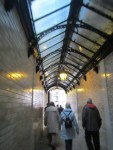
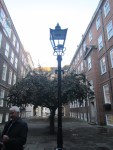
Today there are four Inns, Grey’s, Lincoln’s, Middle Temple, and Inner Temple. By agreement, they all date themselves from about 1420. They are a captivating old world warren of courtyards , narrow passages, and mostly very old buildings. (Many, many television shows filmed here!) The legal profession in the United Kingdom is divided between barristers and solicitors. You deal with solicitors in every matter except actually going to court. Barristers are the ones privileged to advocate before a judge. And to be a barrister, you must be a member of one of these Inns of Court, even if you practice elsewhere in the country. The Inns therefore regulate their membership and the practice of law throughout the country. They “call members to the bar” after rigorous training and a series of twelve dinners in hall (yes, really) which creates a sense of the legal community, no matter where you practice. Then, if you are a member and work in London, chances are good you keep chambers in the Inn in which you are a member. The chambers are an extremely prestigious address and, listening to Victoria, there is a highly complicated protocol governing where a given barrister’s name appears on the board outside the chambers.

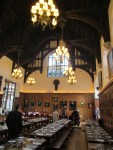
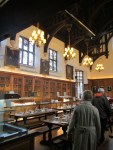
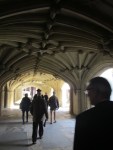
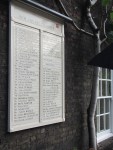
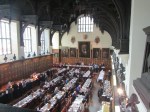
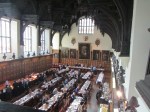
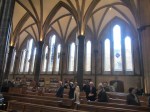
We began with coffee in the Hall of Grey’s Inn, an awe-inspiring affair straight out of a Harry Potter movie. The screen under the minstrel gallery was carved from one of the defeated ships of the Spanish Armada (1588) and portraits lined the walls on loan from the National Portrait Gallery. It was the first of many places that we saw memorial stained glass or plaques expressing gratitude to the American Bar Association for their great generosity in helping to restore these priceless heritage buildings after bomb damage during the 1941 Blitz in World War II.

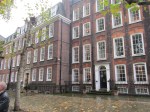
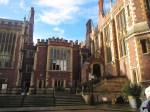
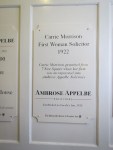
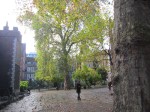
After gliding down passageways and crossing the courtyards of Grey’s Inn, we emerged into Lincoln’s Inn, a beautiful grassed quadrangle flanked by glorious brick halls and chambers. While Victoria had dozens of wonderful, pertinent anecdotes that peppered her remarks about the Inns, most were about prominent legal people that I didn’t recognize. However, Lincoln’s is famous for Tony Blair and his wife Cherie and for Margaret Thatcher—all members of Lincoln’s. Before leaving Lincoln’s we visited the undercroft of their church, a famous spot for the making of deals. Centuries ago, when a woman wanted to give up an unwanted baby, she would try to abandon it in this undercroft. If she was successful, the baby would become a foundling of the Inn and would be given the name of the Inn (eg. John Grey, Mary Lincoln), kept, and educated or apprenticed.

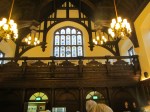
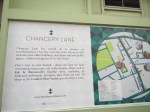
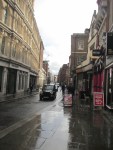
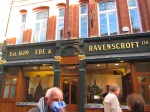
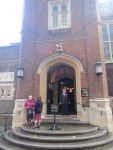
To walk across Fleet Street (once the center of journalism in the UK) towards the Middle Temple and Inner Temple, we stepped out into Carey Street by Chauncery Lane. In earlier generations, one exited from Bankruptcy Court into Carey Street, so an old English expression is about “being on Carey Street,” meaning being bankrupt. We also peered in the windows of Ede & Ravenscroft, the purveyors of all the wigs and gowns worn by barristers and solicitors throughout Britain. Right at 12:30 we arrived for lunch (now in the City of Westminster) at the Hall of the Middle Temple, the main hall of which dates from 1562 and has survived, except for the entrance (rebuilt after bombing in the Blitz), unchanged since then. We weren’t allowed photographs, since judges dining with other judges don’t want their pictures in the paper. I did sneak a couple from the minstrel gallery. But photos don’t do justice to this incredibly beautiful hall. On our day the long rays winter sunlight streamed in through the stained glass windows. The ceiling is a double hammer beam roof and priceless portraits and memorials are everywhere.

This is the hall where, at Candlemas in 1602, the first performance of Shakespeare’s Twelfth Night was offered at the Christmas Revels. To add to this extraordinary ambiance, we were seated and served at the High Table, on a magnificent oak table given by Elizabeth I and built into the hall, never moved since the early 1570s. Here dined people like Elizabeth herself, with Sir Francis Drake and Sir Walter Raleigh, both members of Middle Temple.

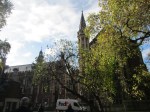
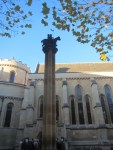
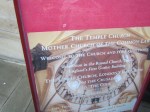
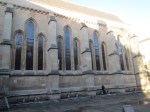
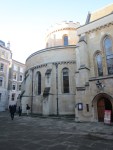
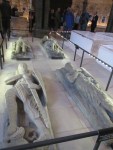
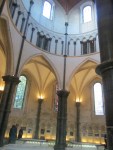
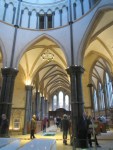
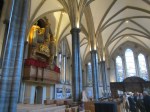
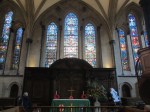
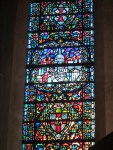
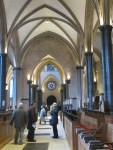
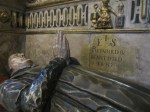
After lunch, a stroll down narrow passages to the Inner Temple where we visited the original Temple Church, built by the Templar Knights and now maintained by the Middle and Inner Temples. The Round Church, consecrated in 1185, was designed after the Church of the Holy Sepulchre in Jerusalem and is the oldest Gothic church in England. The longer Chancel was consecrated in 1240. The church has undergone many restorations. During the Blitz (May 1941) the building sustained terrible damage and wasn’t fully restored and reconsecrated until1958. Again, I’m proud to say that the Americans and the American Bar Association were major contributors to the restoration. The new, beautiful stained glass windows over the altar in one panal memorialize the bombing and fires of St. Paul’s Cathedral during that attack.

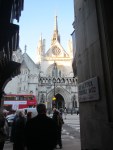
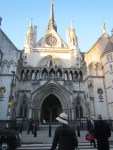
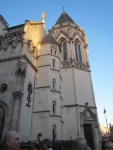
We ended our afternoon with an impressive visit to the Royal Courts of Justice, located just next to all these Inns. No interior photos, again, but we did get to see—just like on television—Courtroom 4, the most superior courtroom in the country.

Intermezzo: London and San Francisco–Tales of the Trailing Spouse, Part XI

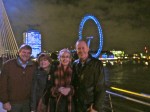
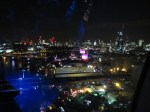
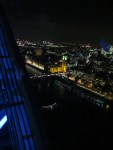
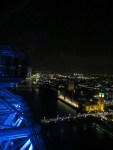
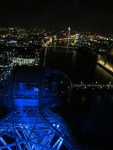
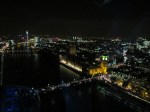
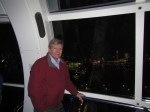
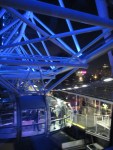
Wednesday night, November 5th: we are riding the London Eye with dear friends of our youth. The night is dark and calm, there’s a full moon shining over the dome of St. Paul’s Cathedral. The River Thames is below, reflecting the blue of the Eye and the sparkling golds and pinks of the buildings on the banks—the Houses of Parliament, Big Ben, Westminster Abbey. It is Guy Fawkes Night, so every few minutes, away off on the horizon, there is the instant flare of fireworks. The wheel turns slowly, slowly and the view is breathtaking.

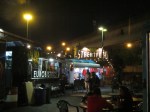
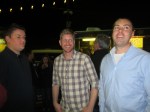
Thursday night, November 6th: we are browsing the offerings of a few dozen food trucks and beer trucks parked in the Streatfood Park of San Francisco. The night is shirtsleeve warm and the moon is still full. Streatfood Park is a big asphalt pad, fenced by chain link, located under the overpass of the highway. Thai food, burgers, Chinese, handmade tortillas, chilis, all kinds of brews. We are meeting up with our son Rhys and his pals, all of whom are in the Saturday wedding of another of this lifelong pack of friends. This is the post-rehearsal meet-up and we have flown halfway around the globe to be here.

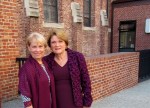
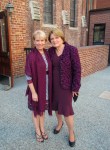
To step back: our friendship with Maureen and Martin dates back to our earliest days in graduate school at Penn. When, believe me, we were kids. Roger and Martin had both received Thouron Fellowships to leave the UK after their bachelor degrees and spend a year studying at the University of Pennsylvania in Philadelphia. They were cabin mates crossing the Atlantic on the USS United States. Meanwhile, Maureen and I were part of a small contingent of women who were the first women accepted for PhD study in the Graduate English Department at Penn. There was ONE female assistant professor and few of the old boys of that then-chauvinistic department knew how to deal with these women students! Maureen recalls that they must have expected a humble, deferent group. Oh, so wrong! We were bumptious, opinionated, ambitious, and very loyal to each other. We were also hot little fashion plates, very different from the plain girls in ripped jeans you see in graduate departments today. This was, after all, 1969 when hair was long, skirts were extremely short, and we were accessorizing with colors, paisleys, and oriental jewelry for the first time. Maureen (as she does to this day) set the trends with us, teaching us how to shop discount, tie scarves, and color match.

We settled in and realized that we were just as able, just as smart, as our male counterparts. That settled, Maureen announced that it was time “to meet some dishy men.” One of the girls from our department was one of those Thouron Fellows. They threw a party six weeks into the fall semester. Neither Roger nor Martin had much of a chance. We have been married 44 years, they 43. Rog, of course, never went home, except to visit. Martin and Maureen wound up in Hong Kong where he is a banker and she has just retired as full Professor at the University of Hong Kong. We have five kids between us—all boys.

We’ve stayed in touch, but seeing one another is rare. We always seem to be just out of synch for British family visits. This time, however, we are here on Roger’s sabbatical while Maureen and Martin’s youngest son was to be married in London on November 1st. An overlap! We’ve met all three of their sons, their new daughter-in-law, and some family members we haven’t seen since their wedding four decades plus ago.

On the 5th, their son Tony snagged matinee tickets to the play King Charles III, by Mike Bartlett. It was tremendously good! The play explores, in elevated blank verse no less, the accession and reign of Charles, Prince of Wales, after the death of Queen Elizabeth II. It speculates, basically, on what will happen when Elizabeth’s reign is over after, say, 70 years—when most Britons have never known another monarch. What would happen when Charles, after waiting his entire adult life, becomes king.? It featured the entire Royal Family in devastatingly good interpretations. Such excellent direction! It cleverly referenced the Shakespearean histories without becoming a pastiche. It was both comic and tender and tragic. The new King Charles almost immediately clashes with his Liberal Prime Minister over the issue of signing an act of Parliament that he disagrees with. Things escalate into a real constitutional crisis that affects the very identity of England post-Elizabeth II. Of course, political manipulators emerge (some quite surprising!) and there’s the examination of the Royal Family as real people in real relationships while they are also the figures of state that tie everything together. It’s really an extraordinary play—but I can’t figure out whether it can or will successfully cross the Atlantic to New York. Anyway, a fabulous afternoon for us!

Then, over to the London Eye, where Martin had had the foresight to buy tickets in advance, allowing us to waltz to the head of the queue and ride just as darkness came on. Afterwards, drinks in a noisy pub followed by a great Turkish restaurant, where we each ordered something different so that we could pass dishes around the table.

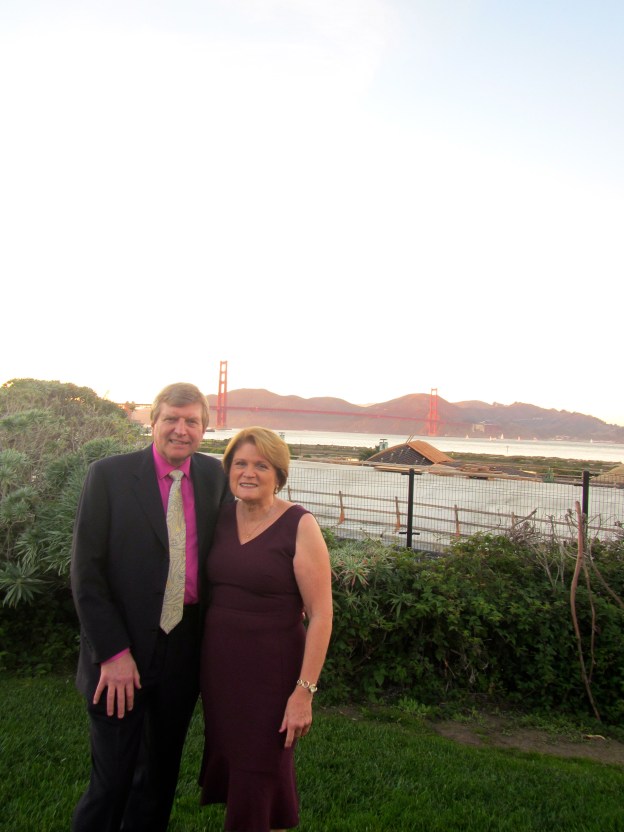
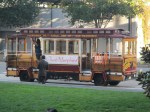
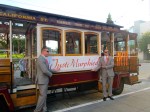
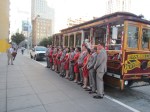
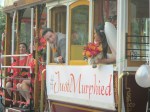
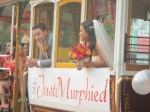
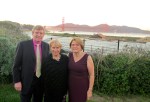
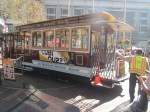
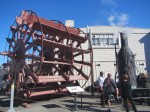
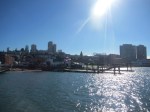
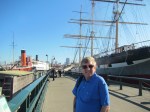
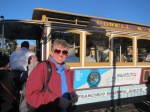
We were out of Heathrow’s Terminal 5 the next morning and off to San Francisco for a long weekend of wedding events and mooching around doing touristy things like riding the cable cars and exploring Fisherman’s Wharf. It was so nice to be a part of the Newport contingent, remembering Pat as a boy and backing up Donna and Terry, his parents. All those groomsmen, our Rhys included, have been friends of Pat since they were all very little boys and today they are a band of brothers. The wedding itself was in beautiful St. Patrick’s Church right off Union Square. Marjorie and Pat had labeled themselves with the hashtag “JustMurphied” and this was the banner on the cable car they used for the getaway vehicle to the reception. Roger and I linked up with Barbara O’Neill, the other mom of a Newport groomsman, and—to our delight—found that we were the first to arrive at the Lookout Post (the officers’ club) at the Presidio. We had arrived when there was still sunset light and there was the Golden Gate Bridge waiting for us as we opened the bar! What a view. The entire evening was a lovely send-off for the newly-weds, a perfect couple in a perfect city.

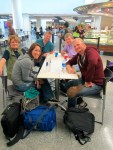
Our lunatic trip to San Francisco right in the middle of the English sabbatical was topped off when we arrived at San Francisco Oakland International Airport for Monday’s return flight. Rhys accompanied us on the BART and we met up—for an hour!—with Nye and Lisa! They had flown up from LA because Nye had a talk to give at the Academy of Art University (his alma mater for his master’s degree). It was AAU’s Alumni celebration and Nye was featured, since it’s been 10 years since his student animation (Magnetism) won all those awards and landed him his first big job with Sony. The five of us sat around one of those plastic airport tables for an hour, drinking soda and catching up. Then we hugged and kissed as Rog and I headed off to security for the flight back to England.

In Rhys’ words: “Well, this is a very Warburton thing, isn’t it?”

Stratford-upon-Avon: Tales of the Trailing Spouse, Part X

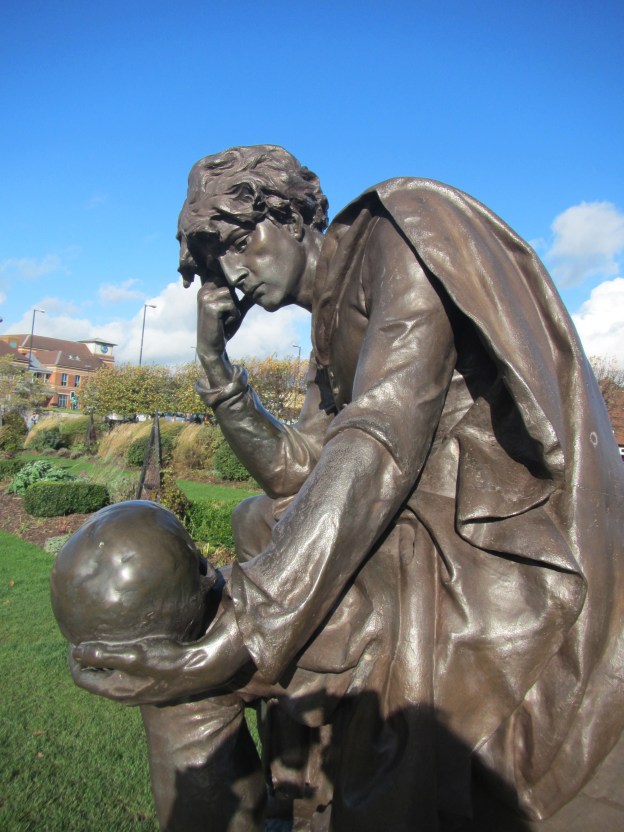
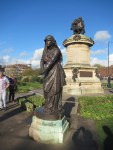
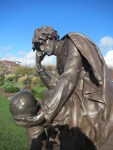
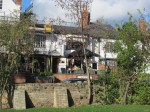
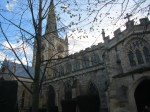
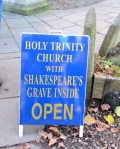
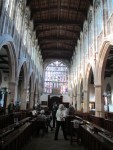
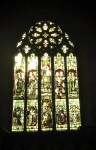
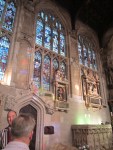
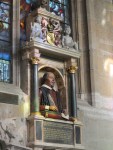
If ever there was a company town, Stratford-upon-Avon is that town. William Shakespeare was born here and he died here. He married here, had three children who lived and died here. He owned LOTS of property here, became Stratford’s most prominent citizen, and is buried (with his entire family) beside the high altar in the local church. So, really—although he does belong to the world—no other town can claim him as Stratford does.

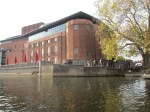
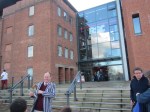
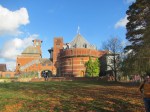
We have been coming here, off and on, for some years to pig out on plays at the Royal Shakespeare Theatre. Only on one visit did we see just one! This visit we treated ourselves to three wonderful productions—two excellent and one so phenomenal that it will define the play for me forever. The two were the Jacobean revenge tragedies The Witch of Edmonton (1621) by Dekker, Rowley, Ford, (and maybe some others) and The White Devil (1612) by John Webster. The other play was Shakespeare’s Much Ado About Nothing (1598), here produced as Love’s Labours Won. Much Ado is my favorite comedy, bar none, and I’ve seen it dozens of times. This version left both of us absolutely breathless.

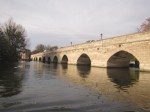
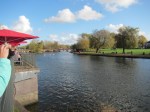
 In between plays, we enjoyed Stratford. We stayed at the White Swan (again), parts of which date back to 1450. So, you eat and drink in the front part with its ancient oak beams, low ceilings, and sagging walls, while you stay and sleep in the comfortable modern new section of the hotel that’s off the back of the building. So, we wandered around Stratford, took a river cruise, had an excellent walking tour of the town, and ate in some good restaurants. I said that Stratford was a company town, and Shakespeare is the product. Shops and restaurants reference his plays, sometimes nonsensically—Iago’s is a jewelers’ store (Honest Iago?), Othello’s is a restaurant, Romeo and Juliet are everywhere. The town is beginning to advertise that it’s “Not Just Shakespeare,” but his birthplace, gravesite, and, most of all, his plays are what draw 3 million visitors a year to a town now the size of Newport.

The two Jacobean plays—The Witch of Edmonton and The White Devil—were part of a season’s theme the RSC called “The Roaring Girls.” They scheduled a season of classic dramas about women, women who challenged the feminine stereotype of the day by seizing some kind of power, even illicit or criminal power. In the case of The Witch, wonderfully played by the great Eileen Atkins, an old woman who is abused, blamed for misfortunes, and accused of witchcraft by men in the town, finally wishes that she were a witch indeed and makes a pact with the devil, who grants her wish. The devil (who was brilliant in his black body suit and shining red eyes) appears to others only as a dog and causes no end of havoc. In the case of White Devil, a woman trying to raise the fortunes of her family becomes the evil adviser to a duke. She pimps her sexy sister to become his mistress, setting in motion the murders of her sister’s husband and the duchess. When her own honest brother is an obstacle to her plans, she coldly murders him. Of course, it being Jacobean revenge tragedy, the stage was absolutely littered with dead bodies and globs of gore were flung everywhere! I resolved never again to sit in the front row at the Swan Theatre, although the worst that hit us was simply champagne.

Anyway, what caught my attention in these strong women themes was that the women “g0t what was coming to them.” They paid an awful price for stepping outside the bounds of the 17th century definition of feminine. Mother Sawyer (the witch) is sentenced to hang and is (as was historically accurate) executed. But she also loses her soul to the devil and none of the characters forgive her. The worst she has done is make cows stop giving milk and fields go dry. In the subplot of the play, a young man gets a girl pregnant, marries her, then marries another girl for her dowry, then MURDERS her (while her pure soul goes to heaven). While he is convicted and sentenced to hang like Mother Sawyer, all the other characters forgive him and he dies repentant so gets God’s forgiveness as well. HIS soul goes to heaven, while the poor witch spends eternity in hell.

In The White Devil, all the women are knifed at the end—ambitious adviser, sensuous mistress of the duke, kind friend and lover alike—sliced and diced and dumped in a heap. Simultaneously. Like the witch (who does not go out silently), these women have major death scenes that allow them to bewail how bad it all is for women. But they all still lose everyone’s sympathy, including that of the audience. The politically opposing count with all his henchmen survives everybody, with a lot of blood on his hands. So women get punished for ambition. Men are rewarded with power.

I had to compare this with Shakespeare. He has such strong women in his plays and some of them, too, are criminal or over-reaching—think Lady Macbeth or Cleopatra. But Shakespeare always creates them with such three-dimensionality that we always feel some sympathy for them. I thought again how incredibly generous a writer he is with “outsider” characters—Shylock or Othello, say—characters that in any other playwright of his day would have been conventional, stereotypical, and lacking any sympathetic motive. Also, these Jacobean plays were produced after Shakespeare, as much as twenty years after a play like Much Ado was first produced. Yet they don’t seem to have learned anything from him. There’s nothing like the rhythm of a Shakespearian play with these guys—no alternating a comic moment with a tragic action or vice versa. Their transitions clunk. And one is forever asking, “Wait! Who’s that?” whereas Shakespeare prepares for every entry and introduces every character without you being aware of it.

Thus, to this RSC production of Much Ado About Nothing. It was set in 1918, as if the returning soldiers came back at the first Christmas after the war to a large country house in England that was serving as an officers’ hospital. This pulls it into this year’s theme, which is World War I, but the late Edwardian (early George V) atmosphere really worked. It allowed for vibrant uniforms, gentlemen’s rituals like billiards, live drawing room music, church hymns, choirs, dancing, and all the protocol of the Edwardian age that comfortably reflected the themes of the play. The production was brilliant. Every bit of stage business served the script. The language was delivered as purely as a crystal bell, every word clear, parsed to exactitude (this is a hallmark of the RSC). The director, Christopher Luscombe, milked comic moments out of lines I had never considered funny before. The Dogberry character was a revelation, pompous, hysterical with malapropisms, then suddenly pitiable. Much of the dialogue was absolutely gut-splitting. The audience were beside themselves. Best of all, Benedict and Beatrice (each performance stunning in itself) were completely balanced. So often one or the other is outstanding (like David Tennant or Emma Thompson) but they aren’t perfectly matched by their counterpart (in my humble opinion). This couple, Edward Bennett and Michelle Terry, were perfect. From the first minute, they deserved each other and their happiness. The entire play was a wonder.

‘I Had Not Thought Death Had Undone So Many’

IMG_4751

Under the brown fog of a winter dawn,

A crowd flowed over London Bridge; so many,

I had not thought death had undone so many

Sighs, shorts and frequent were exhaled,

And each man fixed his eyes before his feet.

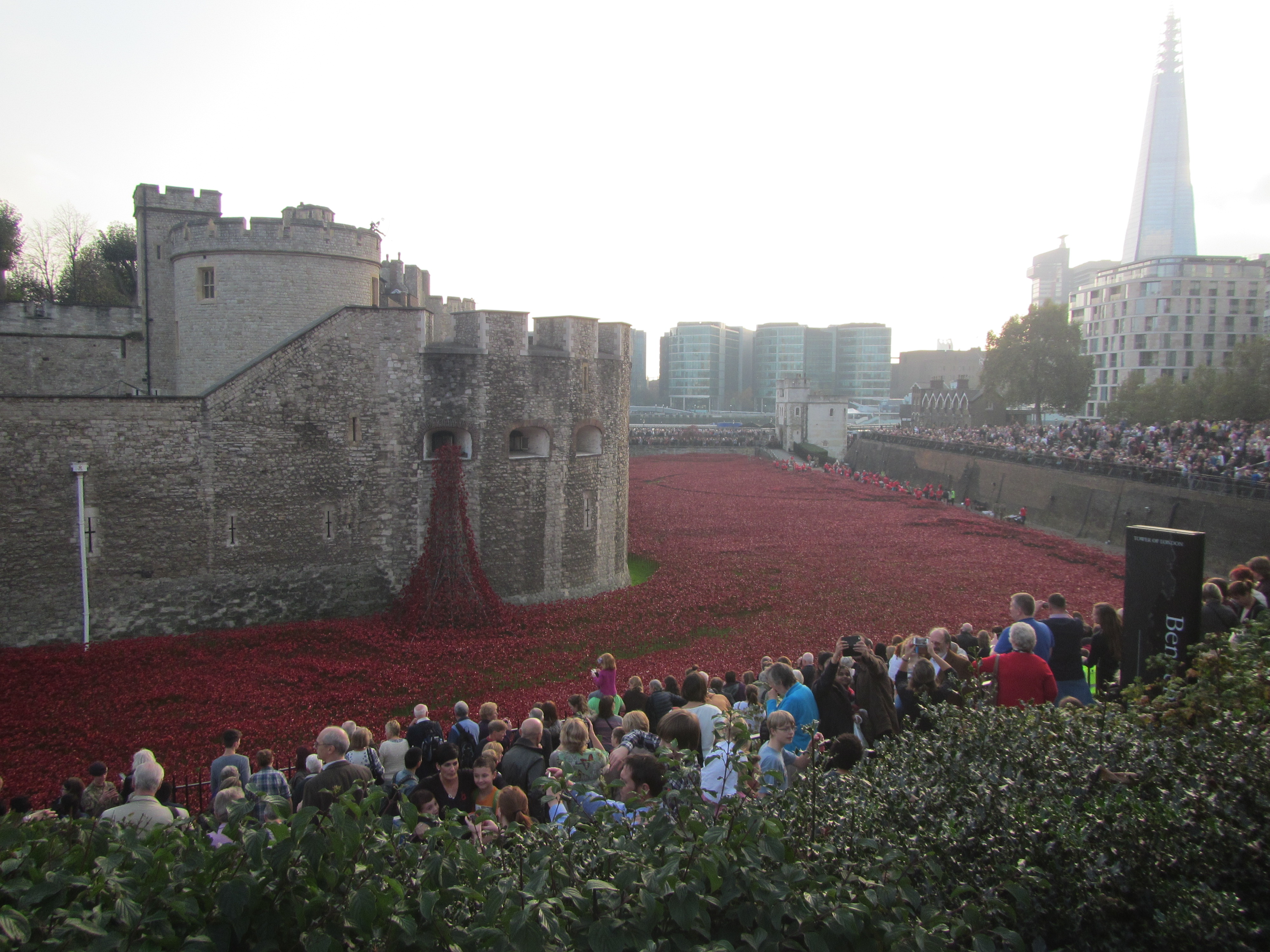
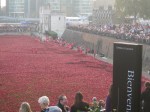
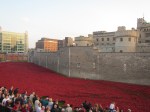
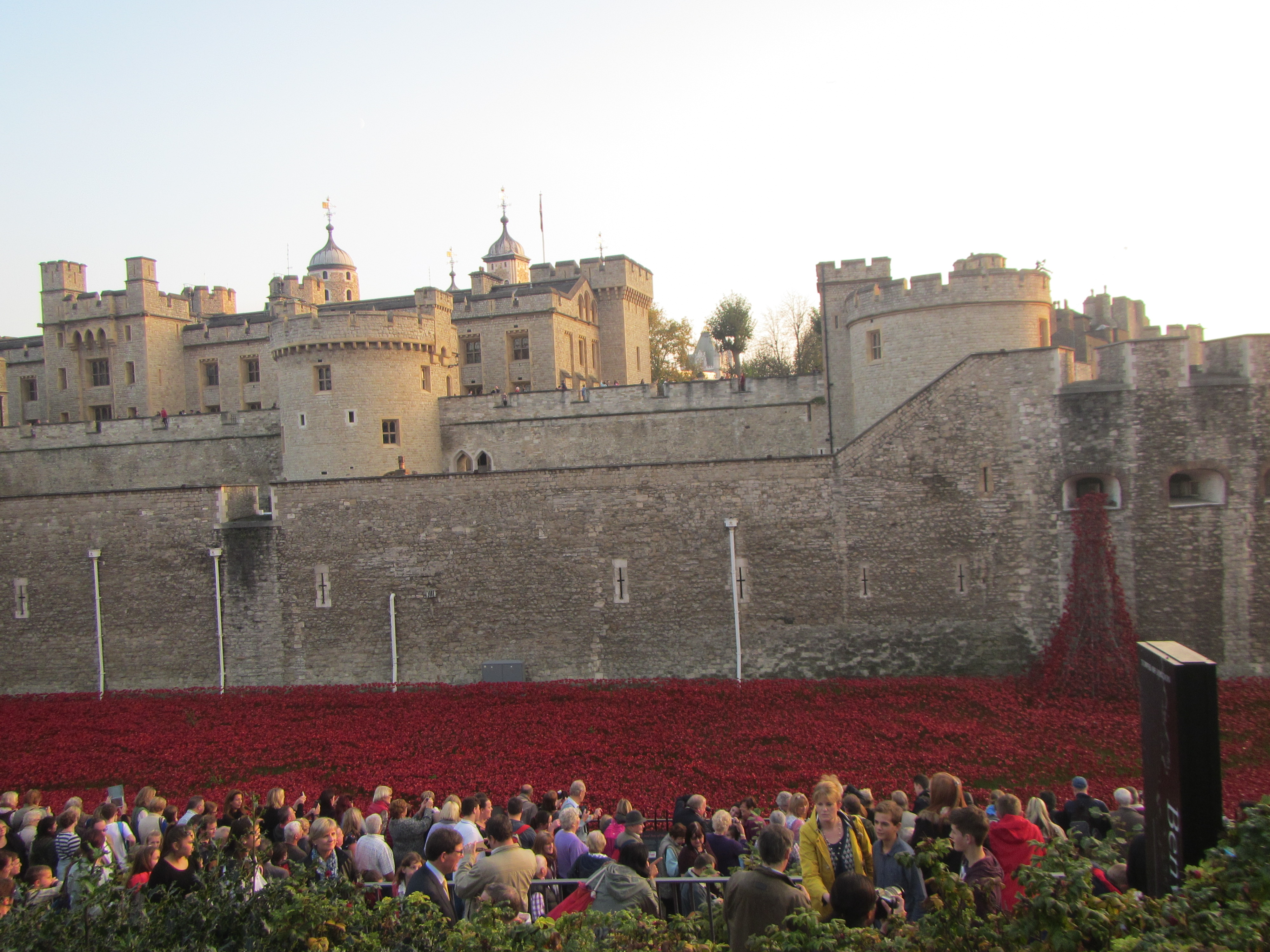
T.S. Eliot wrote this in The Waste Land in 1922 and it kept running in my head as we joined the vast, vast crowds of visitors at this installation at the Tower of London, appropriately just before All Soul’s day.

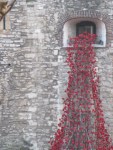
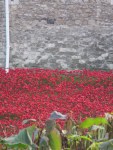
“Blood Swept Lands and Seas of Red” is a commemoration of the Great War, the First World War, 1914-1918, the hundredth anniversary of which is being observed everywhere in Britain right now. 888,246 ceramic poppies have been planted in the dry moat of the Tower of London, one poppy for each British military man or woman who died in World War I. The installation opened on August 5th, the day the war began in 1914, and will end on November 11th, the day of the Armistice. November 11th is always solemnly observed as Remembrance Day in Britain. This installation is a collaboration between ceramic artist Paul Cummins and theatre stage designer Tom Piper. The poppies are made by volunteers and are for sale to the public to support military charities. They’ve completely sold out.

This phenomenal work of public art has captured the attention of everyone in Great Britain. I am only going to write that it is a very moving experience to view it, and in the company of so many serious, attentive people.

Instead of giving my views, I thought I would offer the commentary of those who served in this war and wrote about it.

From Flanders Fields by James McCrae in 1915:

In Flanders fields the poppies blow

Between the crosses, row on row

That mark our place, and in the sky

The larks, still bravely singing. fly

Scarce heard amid the guns below.

We are the Dead. Short days ago

We lived, felt dawn, saw sunset glow,

Loved and were loved, and now we lie

In Flanders fields.

And the last word is from Wilfred Owen in 1918 from Pro Patria Mori: (which, roughly translated from Virgil, means: “Sweet and proper it is to die for one’s country.”)

If you could hear, at every jolt, the blood

Come gargling from the froth-corrupted lungs,

Obscene as cancer, bitter as the cud

Of vile, incurable sores on innocent tongues,

My friend, you would not tell with such high zest

To children ardent for some desperate glory,

The old Lie: Dulce et Decorum est

Pro Patria Mori.

IMG_4765